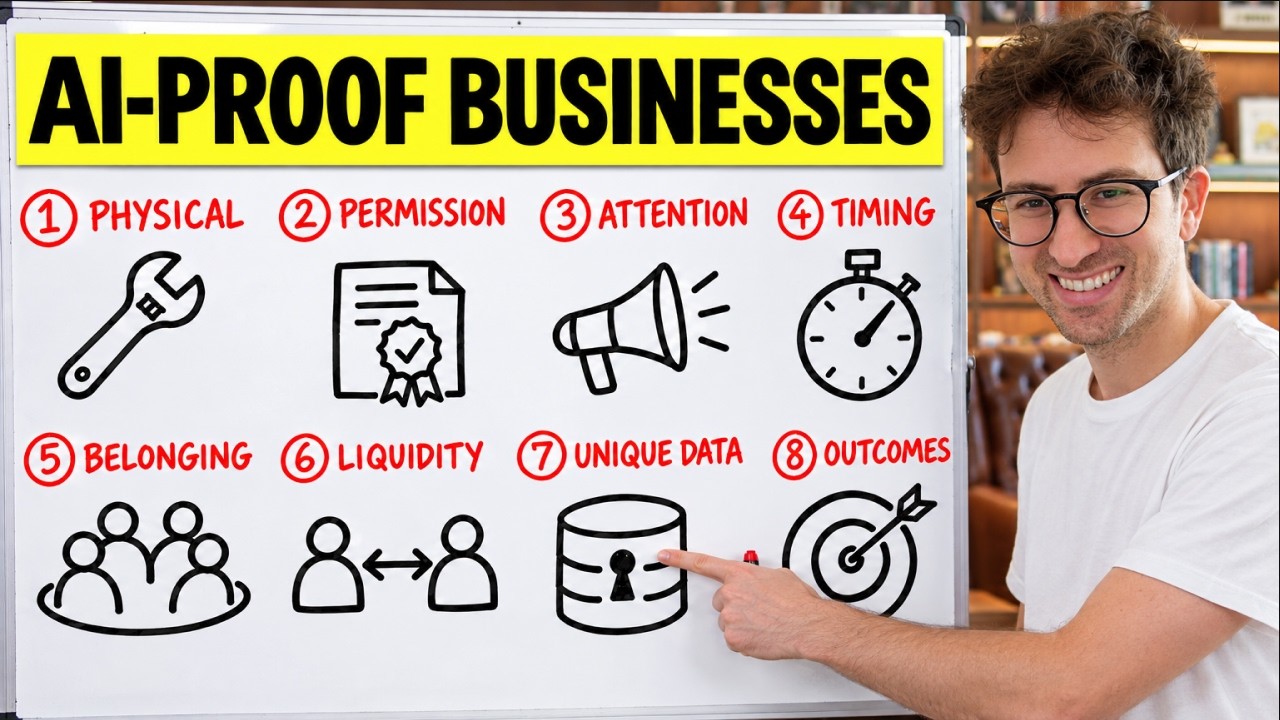
As artificial intelligence reduces the marginal cost of creating software, content, and answers toward zero, founders face growing anxiety over defensibility. In this episode of the Startup Ideas Podcast, host Greg Isenberg examines what AI-proof businesses look like0:20 and lays out an architectural roadmap of eight defensible models for 2027 and beyond.
The first core pillar revolves around physical businesses and atoms1:11. Unlike software, which can be replicated rapidly using frontier models, physical trades such as plumbing or running local coffee shops cannot be unclogged or served by LLMs, creating durable operational moats where business valuations may rise. Closely linked is permission through licenses and regulations2:30, where operating legally requires jurisdictional credentials or preferred partner status with enterprises like Salesforce or Microsoft, allowing non-licensed operators to partner with credentialed professionals like attorneys.
In the digital realm, Isenberg emphasizes that attention remains highly underrated4:11. While pure AI content can saturate feeds, building a trustworthy media brand—using AI tools like Opus to streamline production—establishes founder-led distribution that competitors cannot easily duplicate. Founders can also capitalize on timing micro-niche trends early6:30. Even if an initial product is easily replicated, being first to a rising trend allows founders to accumulate proprietary audience data, user trust, and brand equity before copycats arrive.
Human connection creates another powerful defensive layer through belonging and paid communities8:25. As hyper-connection paradoxically isolates individuals, premium curated mastermind communities like Sam Parr's Hampton or bespoke in-person retreats command recurring membership fees by providing peer accountability. Similarly, two-sided marketplace liquidity11:00, exemplified by car auction platforms like FinalLap and Cars & Bids, creates sticky network effects that small teams can operate efficiently using autonomous AI agents for customer support.
Finally, Isenberg explores unique proprietary data and curated directories14:40, where niche operational data brokers sell training datasets to frontier AI labs, and high-signal human-curated platforms counter noisy public reviews. While Isenberg rates automated outcome-based services19:00 as the least defensible among the eight types, he concludes by showing how founders can mix defensibility categories21:05—such as combining media attention with marketplace liquidity—to build resilient, valuable assets.