Avail.video · Watched for you · 15:45 video · 2 min read · 14 min saved

Rick Rubin on Creative Intuition, Hard Work, and Designing Your Life

Outlier score4.0×Overperformer

93,108 views vs a median of 22,993 across the channel's last 15 long-form uploads · as of Nov 4

Avail.video calculation

Legendary music producer Rick Rubin joins Steven Bartlett on The Diary of a CEO to discuss artistic intuition, the danger of following conventional advice, and the necessity of relentless work ethic. Rubin shares behind-the-scenes stories about declining Guns N' Roses and recording Johnny Cash in his living room, explaining why artists must detach from commercial outcomes and trust their own taste.

Read the teardown

How it earns the click and holds attention, second by second.

Find in this video

Search what was said and shown

One search covers the transcript, on-screen text, claims and references. Every result jumps to its moment.

    The explainer

    What the video says, with a link to every moment

    A 2-minute read, 14 min less than watching. Each underlined phrase opens the video at that second.

    Record producer Rick Rubin joins Steven Bartlett on The Diary of a CEO to share the core philosophical principles behind his legendary career. Rubin explains that creators should never attempt to guess what an audience will like, because true artistry stems from cultivating an internal compass1:52 rather than chasing external consensus. When seeking guidance, Rubin cautions that advice can be dangerous1:20 because people inevitably offer solutions shaped by their own history rather than yours. Instead, an artist must gather diverse, conflicting perspectives until an intuitive certainty reveals what is personally right.

    While Rubin emphasizes the mystical and emotional dimensions of creativity, he insists that great artists work relentlessly3:07. Talent alone rarely surfaces without a grueling, diligent work ethic to support it. To develop an original voice, he urges creators to look beyond their specific field—recommending that individuals visit art museums4:37, explore classical literature, and watch historic cinema. Bartlett compares this eclectic input to Steve Jobs studying typography5:18, demonstrating that unique skill combinations create innovative breakthroughs that standard educational tracks cannot provide.

    slide
    Macintoshinsanely great!
    ▶ 5:18
    On screen at 5:18

    Addressing decision-making, Rubin challenges the modern obsession with analytics, contrasting a cold Moneyball data approach6:19 with profound intuitive moments like falling in love. Relying exclusively on metrics dulls an artist's inner antenna. Rubin illustrates his personal conviction by recalling how he declined to produce Guns N' Roses7:29 after watching them perform as a glam-metal club act; although they achieved colossal stardom, he respected his subjective reaction and recognized he was not the right collaborator for their trajectory.

    chart
    WIN %EXPECTED ACTUALRECORDEXPECTED ACTUALPAYROLL781456─1197481 = .6525 .6296 106 - 56 102 - 60 $34 M.6143 ─ 99 - 63GIAMBI, DAMON, ISRINGHAUSEN.6861 .7160 111 - 51 116 - 46 $71 M
    ▶ 6:19
    On screen at 6:19

    Rubin also dispels the idea that creative success is reproducible. He shares how recording Johnny Cash in a living room9:28 produced transcendent, intimate tracks that could not be replicated when re-recorded with world-class session bands in an expensive studio. Rubin treats art as an entity that dictates its own direction, arguing that creators must simply put their work into the world and treat the outcome as none of their business11:58. Ultimately, he encourages creators to remember their agency: anyone trapped in suffering can walk away from the game14:08 and start anew, recognizing that every trial brings a grounded, realistic view of the world15:19.
    Highlights
    1. 1:20The danger of taking advice based on other people's stories
    2. 3:22Why great artists must pair talent with grueling work ethic
    3. 4:37Broadening perspective through museums, literature, and cinema
    4. 7:29Turning down Guns N' Roses after a basement club gig
    5. 9:28Discovering Johnny Cash's definitive living room recordings
    6. 14:08Life as a chess game you can choose to walk away from
    Chapters across the 15:45 runtime
    How it's told

    A seated podcast conversation intercut with archival footage

    Format: Interview. Rick Rubin explains his philosophy on creative intuition, rejection, hard work, and letting go of life rules in conversation with Steven Bartlett. The discussion moves from artistic practice and personal taste to the broader agency individuals have to walk away and redesign their lives.

    Story arc

    1. 0:00Creative IntuitionIntro montage establishing Rick Rubin's production career and his philosophy of personal taste over audience prediction.
    2. 0:50No Universal FormulaRubin explains why standard artistic advice fails and why creators must follow their unique internal compass rather than external recipes.
    3. 3:06Work Ethic and WorldviewExploring the combination of relentless hard work and cultivating a unique, broad perspective outside one's core discipline.
    4. 5:42Metric vs. IntuitionWhy life and art cannot be reduced to spreadsheets and algorithms, comparing analytical thinking to falling in love.
    5. 7:27Trusting Taste and RejectionThe story of turning down Guns N' Roses, accepting the unpredictability of success, and allowing art to reveal itself through the Johnny Cash sessions.
    6. 12:08Escaping the TrapRubin shares that when creative or career struggle becomes destructive, one always retains the power to walk away and begin anew.
    7. 14:32Humility and PerspectiveRubin reflects on outgrowing the illusion of infallibility and embracing a grounded, realistic worldview.

    Setups and payoffs

    1. 0:02Setup Rubin claims you cannot predict what others will like
      ↳
      7:28Payoff He explains passing on Guns N' Roses because he simply followed his own honest reaction rather than predicting their future massive fame
    2. 1:13Setup Rubin asserts there is no right process in art
      ↳
      9:28Payoff The Johnny Cash sessions demonstrate that accidental living-room recordings became the definitive master tracks after elaborate studio attempts failed
    3. 6:17Setup Analytical "Moneyball" logic is contrasted with emotional instinct
      ↳
      14:02Payoff The metaphor of chess illustrates how individuals mistakenly treat arbitrary life rules as obligatory when they can simply leave the table

    Devices

    • Archival JuxtapositionBlending 1980s/90s studio video with modern 4K interview footage to substantiate Rubin's decades of authority0:019:28
    • MetaphorComparing artistic discernment to having confidence in not liking a particular pizza7:18
    • AnecdoteRecounting the recording of Johnny Cash's American Recordings to demonstrate how art has an autonomous identity9:2810:38
    • Philosophical ReframingReframing severe professional distress not as personal failure, but as a scenario that can simply be stopped like pressing a tape machine button13:1614:16

    From the video's own structure, matched to the transcript and on-screen text.

    Teardown

    An unexpected underwater portrait hooks the scroll, while re-editing Rick Rubin's podcast wisdom into cinematic, bite-sized philosophy transforms artistic advice into universal mental therapy.

    A real overperformer: 3.7× its typical views (85,676 vs a median of 22,964 across the channel's last 15 long-form uploads, as of Nov 3) · Long-form interview · 8 days old

    The promise

    Rick Rubin will explain how to stop overthinking and mentally reinvent yourself.

    Packaging

    How it looks in the feed

    Show the feed as
    15:45

    How to Break Free From Your Own Mind - Rick Rubin

    Motivation2Study85K views · 1w agoThe art of reinvention is something that is within all of us. You just need to break free from your mind and the rules holding you back. In this powerful…

    Views and age as of the teardown, Nov 3, 2026. Other videos are blanked out.

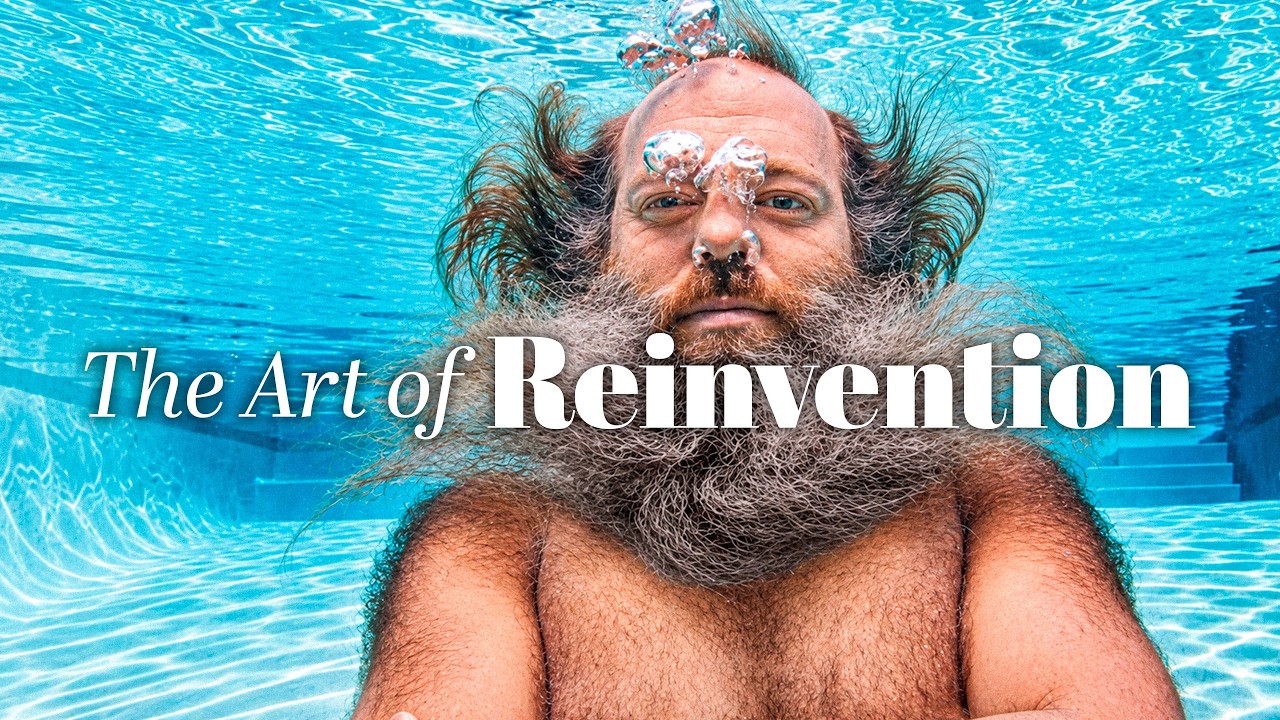
    • 5/5Thumbnail imageThe underwater portrait acts as an instant pattern interrupt in a feed of standard interview setups. Rubin's intense, unblinking eye contact through rising bubbles grounds the frame even at mobile sizes.Rick Rubin fully submerged in clear turquoise pool water with air bubbles rising between his eyes.
    • 4/5Thumbnail text“The Art of Reinvention”The editorial serif font adds prestige and introduces the broader theme of transformation. At four words, it remains quick to read while letting the title handle the specific pain point.White serif text centered over his beard reading The Art of Reinvention.
    • 4/5TitleIt targets a universal emotional struggle and anchors it to Rick Rubin's recognized creative authority. The structure directly states what problem the video intends to solve.Text reading How to Break Free From Your Own Mind - Rick Rubin.
    • 5/5Title + thumbnailThe submerged visual provides an apt visual metaphor for being deep inside one's mind while floating weightlessly. The packaging worked to earn 3.7 times the channel's standard viewership.A calm underwater portrait paired with a headline about escaping the noise of one's thoughts.

    Curiosity gap: How does a legendary music producer quiet his internal noise to start over?

    The three hooks

    The title, the thumbnail text and the first words spoken each make a promise, and each does a different job.

    • Title“How to Break Free From Your Own Mind - Rick Rubin”How-toReliefCuriosityOutcomeIt makes the viewer want a way to escape repetitive thoughts and mental paralysis using Rubin's guidance.
    • Thumbnail text“The Art of Reinvention”ReliefOutcomeNoveltyIt makes the viewer want a pathway to shed their current identity and start fresh.
    • First words spoken“I don't ever try to predict what someone's going to like.”Contrarian takeCuriosityNoveltyIt makes the viewer wonder how a legendary music producer creates hits without ever trying to appeal to an audience.
    • PairingDifferent jobsThe thumbnail text presents the aspirational creative goal while the title addresses the immediate psychological pain point.
    • StakesFitsThe packaging promises a way out of mental noise, and Rubin directly delivers perspective on letting go of toxic obligations and arbitrary life rules.
    • UrgencyNoneThe video offers timeless philosophical advice on personal reinvention without applying artificial FOMO or time pressure.

    The first 20 seconds

    TimeWhat you seeWhat you hearWhat it does
    0:00Black screen with white and blue M2S logo centered.Low ambient synth drone begins.Signals the production channel brand for a brief split second.
    0:01Vintage interview footage of Rick Rubin sitting on a leather couch wearing a red Harvard cap, sunglasses, and a denim jacket.Synth drone hums quietly in background.Immediately introduces the subject promised in the title.
    0:02Rick Rubin on couch talking calmly.Rick Rubin: 'I don't ever try...'Starts speaking directly without any fluff.
    0:03Rick Rubin continuing to speak.Rick Rubin: '...to predict...'Builds anticipation toward the core statement.
    0:04Rick Rubin gesturing slightly with his head.Rick Rubin: '...what someone's going to like.'Delivers a contrarian rule from a legendary producer.
    0:05Rick Rubin remains seated in mid-shot.Rick Rubin pauses briefly as ambient music plays.Allows the counterintuitive statement to settle.
    0:06Rick Rubin resumes talking calmly.Rick Rubin: 'I don't think anyone's...'Sets up the explanation behind his philosophy.
    0:07Rick Rubin framed with a grand piano in the background.Rick Rubin: '...smart enough to know what other people like.'Reinforces the contrarian thesis on creative work.
    0:08Rick Rubin sitting still, speaking.Short pause with background pad.Creates breathing room between thoughts.
    0:09Rick Rubin speaking directly to the off-screen interviewer.Rick Rubin: 'You can only...'Pivots toward the constructive alternative.
    0:10Rick Rubin talking.Rick Rubin: '...try to be in touch with your own feelings...'Introduces the internal focus that aligns with the video title.
    0:11Rick Rubin continues speaking.Rick Rubin: '...and know...'Brings the premise to a close.
    0:12Rick Rubin concludes his sentence.Rick Rubin: '...what you like.'Completes Rubin's foundational creative rule.
    0:13Cut to vintage studio footage of Jay-Z standing beside Rick Rubin and another collaborator.Jay-Z: 'All these records I used to listen to...'Shifts perspective to a superstar collaborator validating Rubin.
    0:14Jay-Z wearing a Von Dutch shirt, gesturing towards Rubin.Jay-Z: '...these guys...'Establishes Rubin's massive authority in hip-hop culture.
    0:15Jay-Z looking at the camera and nodding.Jay-Z: '...are the creators of it.'Delivers social proof supporting Rubin's unconventional advice.
    0:16Jay-Z continues speaking in the studio hallway.Jay-Z: 'They're architects...'Elevates Rubin from mere producer to cultural architect.
    0:17Jay-Z talking with conviction.Jay-Z: '...of what we do right now.'Closes the testimonial proof sequence.
    0:18Cut to live concert footage of Jay-Z rapping into a microphone on stage.Jay-Z's voice echoes out over a stadium crowd roar.Visual proof of the massive stadium-level results of this mindset.
    0:19Stage lights flare as Beyoncé dances beside Jay-Z on stage.Crowd cheering and live performance audio.Visually showcases peak cultural success.
    0:20Jay-Z and Beyoncé performing together under warm stage spotlights.Live stadium atmosphere continues.Solidifies the stakes and scale of the creative guidance being offered.
    Click confirmation
    Yes. Rick Rubin appears on screen at 00:01 and immediately lays out his core philosophy on trusting one's own instincts.
    Time to the point
    0:04
    Hook
    contrarian take, bold claim
    Reason to stay
    If predicting what others like is impossible, the viewer needs to learn Rick Rubin's method for tapping into one's own mind to produce world-class creative work.
    Missing on purpose
    No talking head host introduction, no channel greeting, and no call to like or subscribe.
    Pace and texture
    Deliberate and calm for the first 12 seconds with Rick Rubin, followed by rapid montage cuts to Jay-Z studio testimony and stadium concert clips.

    Story map

    Explainer. An overwhelmed creator or professional trapped in overthinking and external expectations seeks peace; conventional advice and analytical metrics paralyze them, so they must learn to trust internal taste and realize any toxic game can simply be abandoned.

    TimeSectionNew tensionStakesTurnLoops
    0:00 –0:50Guru Credibility & The Contrarian ThesisCan someone succeed creatively without trying to please an audience?RiseRubin says predicting what people like is impossible, but stadium-level icons like Jay-Z confirm his counterintuitive approach works.Opens: How does a producer create legendary records by ignoring public opinion?Closes: Validates Rubin's authority to advise on creative instincts.
    0:50 –3:06The Fallacy of the 'Right Way'If expert advice is inherently hazardous, how do you find the right path?HoldAdvice is based on someone else's story, therefore you must gather conflicting inputs until your internal compass feels resolved.Opens: How do you calibrate an internal compass when you doubt your judgment?Closes: Disproves the idea that copying successful formulas leads to original success.
    3:06 –5:42Work Ethic and Cultivating PerspectiveIs raw creative talent enough to break through the noise?RiseTalent fails without grueling work, but studying only your industry traps you in conformity, therefore you must consume unrelated art.Opens: How does cross-disciplinary study change real-world decision making?Closes: Explains how to build a distinctive personal perspective.
    5:42 –8:08Metrics vs. Intuition & Guns N' RosesCan analytical data replace gut feeling when the stakes are massive?RiseData provides a false sense of security, therefore trusting your taste means accepting that turning down a future giant like Guns N' Roses was still the right call.Opens: If success requires unpredictable alignment, how do you reliably finish work?Closes: Shows why Rubin has no regret over walking away from massive commercial acts.
    8:08 –10:42The Johnny Cash Sessions & Stripping ControlCan creative breakthroughs ever be systematically repeated?HoldFull studio bands could not match living room acoustic demos, therefore the project dictates its own nature when you stop forcing it.Opens: How do you protect your peace once the finished work faces the public?Closes: Proves that magic comes from honesty in the process, not big-budget production.
    10:42 –12:10Releasing Control of the OutcomeHow do you separate your mental sanity from the reaction of other people?HoldYou give everything during creation, but once released, public reception is none of your business.Opens: How does artistic detachment help someone trapped in a grueling career?Closes: Resolves how to divorce creative output from external validation.
    12:10 –14:28The Power to Walk Away & Reinvent LifeHow do you break free when your career or lifestyle feels like an inescapable prison?RiseYou feel obligated to suffer through your choices, therefore remember life is an arbitrary chess game you can stand up and walk away from at any moment.Opens: Did Rubin's own belief in his intuition ever make him feel untouchable?Closes: Delivers the core promise of freeing oneself from mental self-imprisonment.
    14:28 –15:45Humility and Realistic PerspectiveWhat happens to your mindset when you finally meet failure?FallEarly success made him feel invincible until criticism struck, therefore he exchanged the burden of feeling like Superman for grounded reality.Opens: None.Closes: Brings the conversation to a grounded, human conclusion.

    Payoff: delivered in part at 13:19. Rubin delivers profound philosophical reframing and permission to quit toxic situations rather than a structured tactical routine. Ending: Rubin admits public criticism stripped away his illusion of being Superman, ending the interview on humble laughter and admitting he is simply tired.

    Leaks

    Where a viewer might leave. Guesses from watching, not retention data.

    • 2:44 Bartlett asks how to know the right answer, and Rubin's response ('You'll know it') turns circular and abstract, risking viewer frustration.
    • 4:36 Rubin offers standard cultural advice like visiting museums and reading classic literature, which slows down the narrative momentum into generic tips.
    • 11:06 The discussion lingers on the metaphysical personification of songs having minds of their own, which may alienate viewers looking for practical psychological takeaways.

    Steal this

    1. Contrarian hook backed by rapid testimonial montages Open on an unconventional philosophy from the subject, then immediately cut to world-renowned authority figures validating them within 15 seconds. 0:02
    2. High-profile 'miss' as proof of conviction Demonstrate integrity not through a list of massive wins, but by sharing a famous project you turned down (like Guns N' Roses) and calmly standing by your taste. 7:27
    3. Reframing chronic stress as an optional board game Relieve emotional tension by comparing a serious adult dilemma to a chess match where the participant retains the right to simply walk away from the table. 14:03

    Skip this

    • Pacing a 15-minute video around long, unhurried conversational pauses supported by stock footage. This relies entirely on Rick Rubin's existing guru status and Steven Bartlett's interview brand; an unknown creator would lose viewer retention during such slow dialogue.

    Open questions

    • What was the audience retention drop when the video shifted from the high-energy Jay-Z concert montage at 00:20 into the quiet studio interview at 00:50?
    • Did Motivation2Study license the audio directly from The Diary of a CEO or rely on fair use commentary norms?

    Teardown by Avail.video from the thumbnail, the title, the first 20 seconds and the report's notes on the whole video.

    On screen

    Everything the video showed you

    Slides, frameworks, quotes and formulas, captured verbatim with the moment they appeared. Tap any card to jump there.

    Reference shelf

    People, ideas and things mentioned

    Said means mentioned aloud; Shown means it appeared on screen.

    People5

    Organizations2

    • Guns N' RosesFamous American hard rock band formed in Los Angeles.7:29Said7:30Said7:44Said
    • Motivation2StudyEducational and motivational YouTube channel.0:00Shown0:13Shown0:14Shown15:40Shown

    Things on screen1

    • The Diary of a CEOPodcast hosted by Steven Bartlett.0:50Shown0:51Shown15:30Shown
    Video description

    A description you can paste into YouTube

    A hook, a summary, chapters in YouTube's format and what the video mentions. Copy it, edit it, and paste it into YouTube Studio.

    1,285 / 5,000 characters
    By the numbers

    What YouTube shows about this video and its channel

    As of Nov 4, 2026. YouTube's public numbers first, then Avail.video's own arithmetic on them.

    The video

    Views
    93.1K
    Likes
    1.2K
    Comments
    39
    Published
    Oct 26, 2026
    Length
    15:45
    Category
    Education
    YouTube's topics
    —
    Captions
    No
    HD
    Yes
    Language
    English
    Paid promotion
    None declared
    Made for kids
    No
    License
    Standard YouTube

    Creator's tags

    • best motivational video
    • m2s
    • motivation2study
    • study motivation
    • best motivation
    • best motivational videos
    • motivation
    • motivational speech
    • morning motivation
    • the art of creativity
    • rick rubin
    • rick rubin interview
    • rick rubin podcast
    • rick rubin creativity
    • mindset
    • motivational
    • inspiration
    • speechless
    • philosophy
    • the secret
    • creativity
    • creative
    • consciousness
    • talk
    • Meaning of Life
    • truth
    • god
    • Rick
    • Rubin
    • genius
    • music production
    • rick rubin advice

    The channel

    Subscribers
    4.6M
    Videos
    918
    Total views
    397.9M
    Channel age
    9 years (since Mar 2017)
    Country
    Canada
    Uploads
    about every 7 days
    Across the last 15 long-form uploads
    Before this video
    7 days after the previous long-form upload

    Calculated by Avail.video from YouTube's public numbers

    Outlier score
    4.0× · Overperformer
    Views against the median of the channel's last 15 long-form uploads
    Views per subscriber
    0.02
    Likes vs the channel's usual
    0.9× the channel's usual
    1.3% of views vs a usual 1.5%
    Comments vs the channel's usual
    1.4× the channel's usual
    0.042% of views vs a usual 0.030%
    Rank among recent uploads
    #3 of 16
    By views: this video and the channel's last 15 long-form uploads
    Views over the last 30 days

    85.6K on Nov 3, 2026 to 93.1K on Nov 4, 2026 · 3 readings

    Take it to your AI

    Ask Claude or ChatGPT about this video

    Copy this report as context, paste it into a chat, then ask anything. It includes timestamps, so answers can point back to the video.

    Then ask
    • Turn the main ideas into a checklist I can use this week.
    • What are the strongest claims in this video, and what evidence does it give for each?
    • Write a short summary for someone who hasn't watched it, linking the key moments.
    • Quiz me on this video, one question at a time, and cite the timestamp for each answer.

    Watched by Avail.video · 2026-11-03