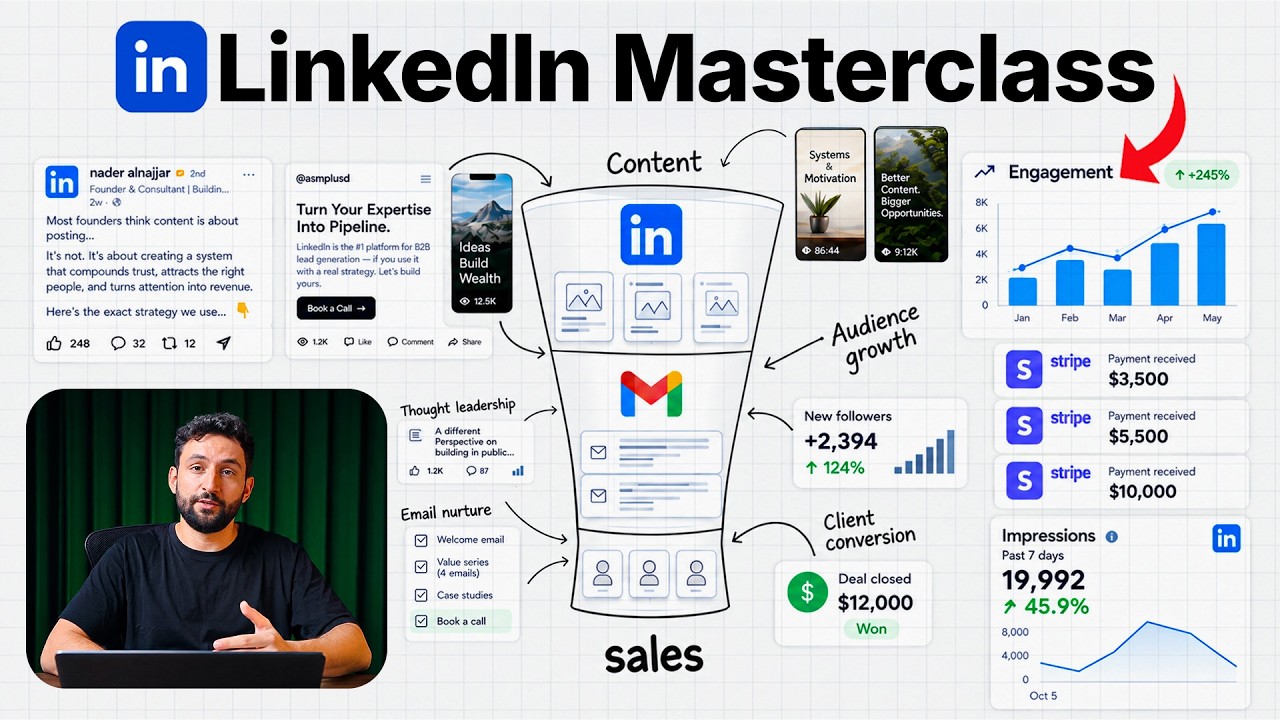
Monetizing a personal brand on LinkedIn requires a disciplined system rather than reliance on algorithm hacks or vanity metrics. According to Nader Alnajjar, founder of LeverBrands, the single biggest mistake creators make is assuming they can leap directly from viral visibility to sales. Instead, sustainable revenue stems from a structured three-tier architecture: attention generation, audience nurturing, and offer monetization, detailed in the personal brand ecosystem overview0:56.
The first phase focuses on capturing relevant attention by establishing crystal-clear positioning and optimizing your profile. Creators must define their target audience, unique value proposition, and key differentiators using the positioning triangle framework2:50 before writing content. Once positioning is locked, the profile acts as a dedicated landing page designed to direct visitors to a single call to action, as demonstrated in the profile optimization walkthrough4:38. Content creation is then structured across a 40/40/20 funnel—allocating 40% of posts to broad top-of-funnel reach, 40% to deep mid-funnel education, and 20% to bottom-of-funnel case studies and proof, as visualized in the content funnel breakdown4:58. Rather than guessing what resonates, Alnajjar advocates leveraging pre-validated content principles5:30 by identifying proven hooks, ideas, and reusable structural layouts like the three visual post templates6:38.
The second layer centers on nurturing relationships and deplatforming followers away from algorithm dependency into an owned email list. As Alnajjar highlights during the deplatforming rationale8:22, a modest list of 5,000 dedicated subscribers is substantially more valuable than 50,000 transient social followers. Email capture is facilitated through targeted lead magnets tailored either to specific ICP pain points or mapped directly across the five stages of customer awareness9:48. Once leads opt in, backend questionnaires enable granular audience segmentation10:59, routing subscribers into tailored content streams based on their immediate bottlenecks. Incorporating live weekly touchpoints, such as converting leads through weekly webinars12:40, rapidly deepens trust and accelerates sales cycles.
Finally, the third layer monetizes this accumulated trust through deliberate offer structures. Using frameworks from Alex Hormozi's work, highlighted in structuring offers with money models14:28, creators match their delivery mechanisms to ticket sizes—directing low-ticket self-serve buyers to instant checkouts while booking discovery calls for high-ticket client packages. This exact architecture supported Chris Donnelly's multi-million dollar funnel13:15, demonstrating that revenue growth is simply a function of diagnosing and operating a fully connected ecosystem.