| 0:00 –0:30 | The Jack Reacher Phenomenon | How does one author sell more books than Harry Potter? | Rise | The host establishes Child's astronomical commercial metrics; therefore, the viewer expects high-stakes tactical secrets. | Opens: How does Child produce bestsellers that sell every 9 seconds? |
| 0:30 –5:04 | The American Frontier & Job Mindset | Why would a fired British TV worker write American crime fiction? | Hold | Child needed money after getting fired, but Britain's geography was too tight; therefore, he exported his loner hero to America's frontier. | Opens: How does an outsider bring setting to life without extensive research?Closes: Why Jack Reacher operates in America instead of the UK. |
| 5:04 –8:37 | Setting, Climate, and Anti-Planning | Can you really write intricate thrillers without outlines? | Rise | Most writers preach detailed outlines, but Child refuses to plan; therefore, he relies purely on physical temperature and emotional tone. | Opens: If he doesn't plan, how does he keep readers hooked from page one?Closes: How Child determines book settings. |
| 8:37 –12:51 | Influences & Recurring Series Appeal | What makes readers buy 20+ books of the same character? | Hold | Writers love artistic novelty, but mass readers crave familiar comfort; therefore, a recurring series offers pre-approved emotional safety. | Opens: What strict habits allow a writer to deliver on this annual reader contract?Closes: Why recurring series outperform standalone novels commercially. |
| 12:51 –14:49 | The September 1st Routine | Does an elite author ever run completely dry of ideas? | Hold | Child panics every August thinking he is washed up, but trusting his calendar triggers the opening line right on September 1st. | Opens: What life philosophy fuels this unromantic output?Closes: How Child structures his working year. |
| 14:49 –21:03 | Reckless Living & Commercial Transactions | Should creative work be treated as high art or a commercial deal? | Hold | He rejects virtuous self-care and artistic pretension; therefore, he treats writing purely as an entertainment transaction with an audience. | Opens: How do you mechanically structure a story to satisfy both elite and casual readers?Closes: Why Child openly embraces commercialism over artistic purism. |
| 21:03 –26:15 | The Rings of Saturn & Sentence Propulsion | How do you keep people reading who only read one book a year? | Rise | Readers are not uniform, therefore sentence rhythm must act like an accelerating pop song tempo to physically push casual readers forward. | Opens: What structural trick keeps them turning pages beyond sentence rhythm?Closes: The exact mechanics of verbal propulsion on the page. |
| 26:15 –31:48 | TV Remote Controls & Unanswered Questions | What is the single most important rule of suspense? | Rise | Remote controls forced television to manipulate human curiosity; therefore, novelists only need to pose unanswered questions to keep attention. | Opens: How do you build a protagonist that readers don't get tired of?Closes: How to make a book impossible to put down. |
| 31:48 –35:01 | Un-needy Protagonists | Should a main character be engineered for likability? | Hold | Trying to make an audience like a hero repulses them; therefore, characters must display indifferent self-confidence. | Closes: Mamet's rule on protagonist confidence. |
| 35:01 –36:01 | Sponsor Segment: Basecamp | Can project management software be simple? | Fall | Sag: no turn | |
| 36:01 –38:46 | Honesty Over Likability in Reacher | Why do millions love a dirty, violent barbarian? | Hold | Child assumed readers would reject Reacher's rough morality, but because Child genuinely liked him, readers resonated universally. | Opens: How do you make dialogue sound believable when spoken by such archetypes?Closes: Why calculated likability fails in character creation. |
| 38:46 –43:16 | The Craft of Artificial Dialogue | Is good fiction dialogue just transcribed real speech? | Rise | Real speech is messy and unreadable; therefore, written dialogue must be a crafted illusion using primal cadence and repetition. | Opens: Where should a suspense narrative actually begin on the page?Closes: How to control emphasis in dialogue without relying on italics. |
| 43:16 –47:45 | In Medias Res & Loose Ends | How much backstory does a reader need upfront? | Hold | Amateurs start with exposition, but commercial fiction must launch in medias res and tie up every loose end cleanly by the finale. | Opens: How can an improviser execute tight structures without planning?Closes: Where to start and finish a narrative arc. |
| 47:45 –52:21 | The Vast Internal Database | How does Child improvise coherent plots without notes? | Rise | Writers think they need outlines, but reading tens of thousands of books builds an unconscious structural library that directs the story automatically. | Opens: Why do civilized, educated readers crave raw violence on the page?Closes: How improv writing works without devolving into chaos. |
| 52:21 –56:57 | The Psychology of Fictional Violence | Why do peaceable citizens love brutal revenge scenes? | Hold | Civilized society forbids direct retribution; therefore, fictional violence provides cathartic compensation for suppressed real-world frustration. | Opens: How do you instantly telegraph personality in characters?Closes: The real emotional function of fight scenes in commercial fiction. |
| 56:57 –58:22 | Clothing & Physical Shorthand | How can you define a character in three seconds without exposition? | Hold | Readers rely on visual archetypes; therefore, noting double denim or crooked teeth instantly conveys a personality profile. | Opens: Can this novelistic intuition be taught in a seminar?Closes: Using sensory details as character shorthand. |
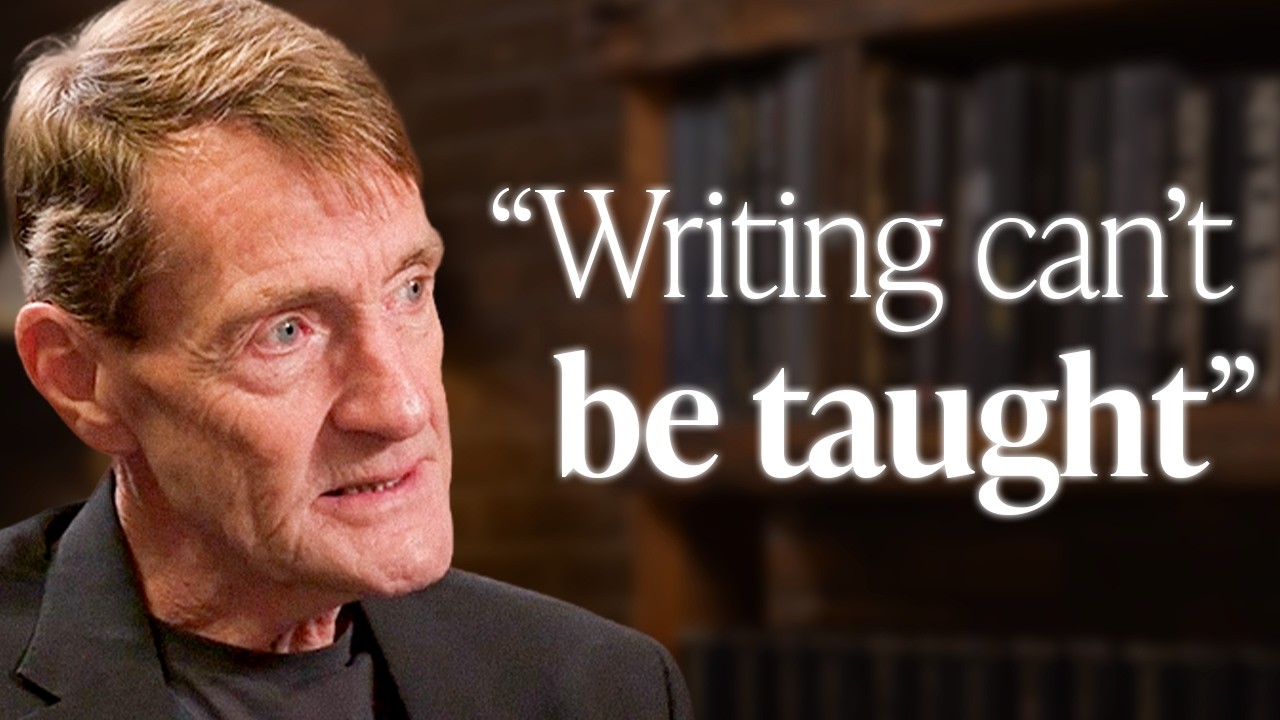
| 58:22 –1:00:43 | Why Writing Cannot Be Taught | Is storytelling an innate neurological wiring or an acquired craft? | Fall | Universities sell creative writing programs, but Child insists foundational narrative instincts resemble musical neurology and cannot be taught. | Opens: Where do master storytellers develop their gifts naturally?Closes: Child's view on creative writing education. |
| 1:00:43 –1:03:05 | British & Irish Storytelling Traditions | What social environments foster great spoken narrative? | Fall | Classroom instruction fails, but pub culture offers a brutal five-second proving ground where everyday people learn to hold attention. | Closes: How cultural exposure trains instinctual storytellers. |