Avail.video · Watched for you · 34:28 video · 2 min read

Scaling AI & Agentic Workflows: Mark Papermaster with Boris Cherny (Anthropic)

Outlier score17.1×Breakout

15,529 views vs a median of 911 across the channel's last 9 long-form uploads · as of Oct 29 · 6 days old, early

Avail.video calculation

AMD CTO Mark Papermaster interviews Anthropic engineering lead Boris Cherny on the paradigm shift from single-line code completion to autonomous multi-agent orchestration. Cherny explains how Anthropic achieved an 8x increase in engineering output by putting Claude at the center of all operations and systematically eliminating bottlenecks. They discuss multi-layer subagents, test-time compute, balancing ROI, prompt injection security, and how agentic workflows help semiconductor designers overcome the slowdown of Moore's Law.

Read the teardown

How it earns the click and holds attention, second by second.

Find in this video

Search what was said and shown

One search covers the transcript, on-screen text, claims and references. Every result jumps to its moment.

    The explainer

    What the video says, with a link to every moment

    A 2-minute read. Each underlined phrase opens the video at that second.

    In this in-depth conversation hosted by AMD, Chief Technology Officer Mark Papermaster sits down with Anthropic engineering lead Boris Cherny to analyze the rapid evolution of software engineering in the era of frontier artificial intelligence. Cherny explains that AI coding has moved beyond single-line autocompletion toward comprehensive autonomous systems capable of implementing entire features and systems. This progress is driven by empirical scaling laws that continue to hold and accelerate. Cherny emphasizes that Anthropic designs products like Claude Code and Claude Cowork based on the principle that models must act as coordinators3:08 rather than rigid, deterministic step-by-step systems, giving models autonomy over tools, skills, and Model Context Protocol (MCP) servers.

    Inside Anthropic, Claude functions as customer zero and sits at the very heart of daily operations. Cherny references a 1990s Harvard Business Review paper comparing businesses that relegated computers to office corners with those that discarded filing cabinets and rebuilt around computing. Applying that principle to AI has allowed Anthropic to achieve an 8x increase in code output7:07 per engineer since early 2025 by systematically unblocking each development bottleneck—from code creation to peer reviews, security triage, and go-to-market copy generation. This shift elevates individual engineers into versatile CEO archetypes10:25 who autonomously discover user needs, prototype solutions, and release products without complex multi-team overhead.

    The discussion highlights the architectural progression from single agents to parallel multi-agent orchestration12:40. Anthropic engineers currently operate dozens to hundreds of agents, utilizing nested subagents supported up to five layers deep14:09 and cloud-based execution. These dynamic workflows have allowed enterprises to complete monumental tasks rapidly, such as Stripe migrating major codebases14:50 in four days rather than months, and Anthropic migrating the Bun JavaScript runtime from Zig to Rust. When evaluating investments, Cherny warns against purely cutting compute expenses; instead, organizations must focus on maximizing return18:15 by granting employees psychological safety to experiment with test-time compute and variable effort levels before optimizing token usage.

    Addressing governance, Cherny notes that newer models like Opus 4.7 and 4.8 demonstrate marked reductions in sycophancy while delivering industry-leading resistance to prompt injection attacks25:55. To eliminate human approval fatigue during high-volume tool execution, Anthropic implemented an automated classifier auto mode27:45 proven safer through red teaming. Connecting hardware to software, Papermaster reveals how Moore's Law limits29:40 have made semiconductor state spaces so complex that AMD relies directly on agentic AI workflows to optimize modern chip architectures, demonstrating a symbiotic feedback loop between advanced silicon and AI development.
    Highlights
    1. 3:08Model as coordinator of agentic workflows
    2. 7:078x code output increase per engineer
    3. 10:25Rise of the CEO archetype engineer
    4. 14:09Five-layer nested subagents and cloud execution
    5. 17:05Test-time compute and model effort levels
    6. 27:45Auto mode replacing human confirmation fatigue
    Chapters across the 34:28 runtime
    How it's told

    An executive fireside chat exploring agentic workflows

    Format: Interview. AMD CTO Mark Papermaster interviews Anthropic's Boris Cherny on the transition from simple autocomplete tools to autonomous multi-agent software engineering. They explore internal developer transformations, safety classifiers, test-time compute scaling, and bridging physical hardware limits with AI.

    Story arc

    1. 0:00Exponential Model CapabilitiesBoris reflects on the accelerating capability curve of LLMs in software engineering.
    2. 1:54Shift to Agentic WorkflowsDiscussion of transitioning from deterministic autocomplete to model-coordinated agent architectures.
    3. 4:12Anthropic's Internal CultureHow Claude permeates every internal process, onboarding task, and engineering phase at Anthropic.
    4. 6:16Productivity & Historic ParallelsAnalogy to 1990s computer adoption and achieving an 8x code output gain per engineer.
    5. 8:33Evolution of Engineering AbstractionHow engineers evolve from coding syntax to managing agents, loops, and CEO-level decision-making.
    6. 12:20Scaling AgentsProgressing from single-agent usage to parallel sub-agents and cloud-based execution.
    7. 15:25Real-World Codebase MigrationsMassive codebase migrations completed in days rather than months at AMD and industry partners.
    8. 16:45Scaling Laws & Test-Time ComputeBalancing token spend, test-time compute, and maximizing ROI over simple cost-cutting.
    9. 19:26Democratization of EngineeringJunior engineers leveraging agents to solve critical chip design bugs previously stalling senior teams.
    10. 20:34Humility and Model TrustTransitioning from micromanaging AI outputs to treating models as senior technical peers.
    11. 22:44Evals vs. VibesMethodologies for evaluating agent workflows and knowing when intuition versus rigorous benchmarking applies.
    12. 24:00Safety, Governance & AlignmentModel truthfulness, anti-sycophancy, and system-level defense against prompt injection attacks.
    13. 28:18Future of Compute & Moore's LawBridging the physical limits of semiconductor scaling with agentic software orchestration.
    14. 31:36Six-Month OutlookPredictions for multi-day autonomous agents, startup creation, and fully end-to-end AI product development.
    15. 33:02Host SummaryMark Papermaster reviews key takeaways regarding non-traditional hires, democratization, and ROI on experimentation.

    Setups and payoffs

    1. 0:33Setup Boris notes scaling laws describing increasing model intelligence over time
      ↳
      16:45Payoff Boris revisits traditional scaling laws versus test-time compute and token allocation.
    2. 1:38Setup Boris introduces multi-agent asynchronous workflows
      ↳
      13:48Payoff Deep dive into nested sub-agents and executing five-layer agent hierarchies.
    3. 6:36Setup Boris explains putting the computer at the center of the business process
      ↳
      7:29Payoff Boris shares Anthropic achieving an 8x increase in code output per engineer.
    4. 10:28Setup Boris describes engineers becoming autonomous "CEO archetypes"
      ↳
      19:35Payoff Mark validates this with an AMD junior engineer solving a chip design bug in a single weekend.
    5. 14:18Setup Boris mentions running agents in the cloud
      ↳
      27:20Payoff Boris details multi-day autonomous workloads running securely with automated classifiers.

    Devices

    • Historical AnalogyComparing modern agent adoption to 1990s PC integration debates based on a Harvard Business Review article6:18
    • Personal AnecdoteBoris discussing his grandfather programming with punch cards in the USSR to illustrate generational abstraction shifts8:44
    • Contrasting FrameworkFraming ROI evaluation as over-focusing on the "I" (cost-cutting) versus optimizing the "R" (return on experimentation)17:58
    • Industry ExamplesCiting Stripe's Scala-to-Java conversion and Bun's Zig-to-Rust migration to validate large-scale agent orchestration14:5215:05
    • Corporate Case StudyMark recounting AMD's junior engineer solving an elusive chip bug via agentic processes over a weekend19:35

    From the video's own structure, matched to the transcript and on-screen text.

    Teardown

    Technical AI practitioners click for Anthropic insider authority and contrarian technical promises, staying for high-level architectural predictions despite the complete absence of live code demos.

    A breakout: 17.1× its typical views (15,529 vs a median of 911 across the channel's last 9 long-form uploads, as of Oct 29) · Long-form interview · 6 days old, early

    The promise

    Viewers expect to see the advanced tools and internal workflow Anthropic's team uses that replace standard prompt engineering.

    Packaging

    How it looks in the feed

    Show the feed as
    34:28

    Stop Prompting — Head of Claude Code Uses Opus 5.5 + Graphs + Harness

    hyperfixation on AI | beamnxw15K views · 6d agoCreator and head of Claude Code at Anthropic: "100% of my code is written by Opus 5.5. You don't need better prompts. You need graph + harness engineering for…

    Views and age as of the teardown, Oct 29, 2026. Other videos are blanked out.

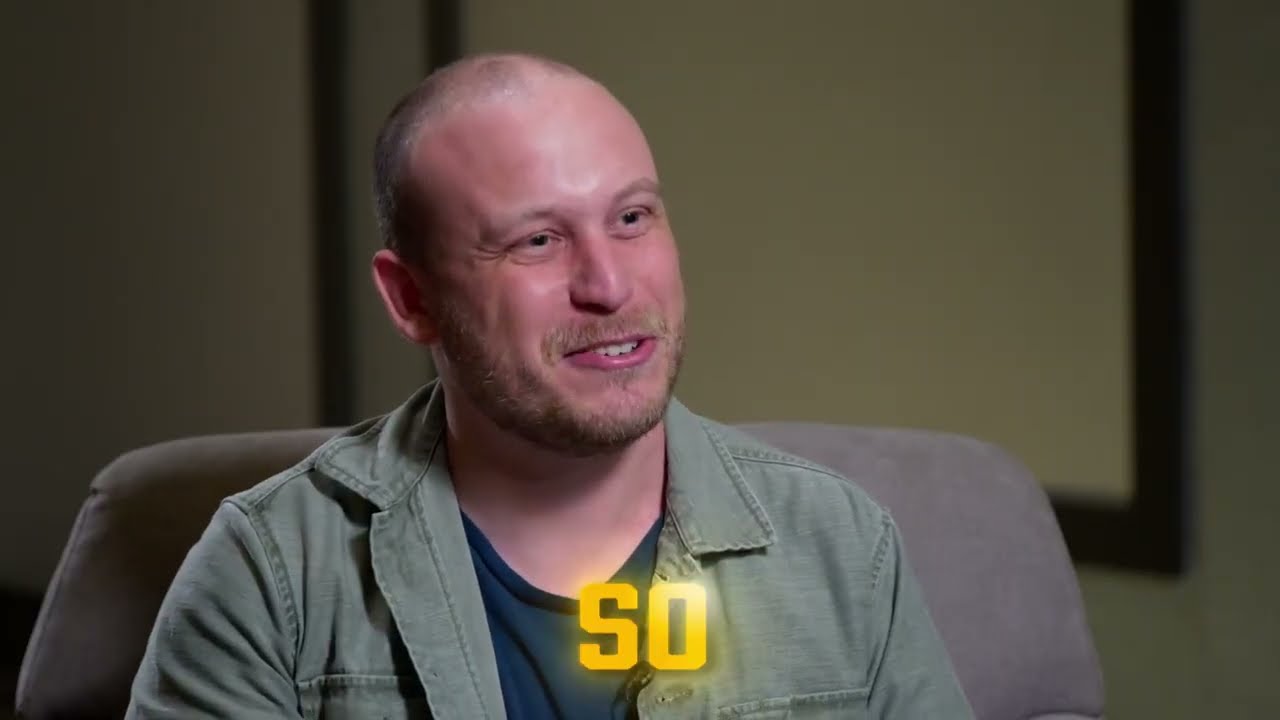
    • 3/5Thumbnail imageA simple podcast-style screengrab that relies entirely on authentic interview framing rather than graphic polish. It looks raw and unedited, which signals credible insider footage to technical viewers.Medium close-up of a smiling man in a green jacket sitting in an armchair against a soft-focus background.
    • 1/5Thumbnail text“SO”A stray subtitle captured mid-sentence rather than a planned graphic element. It conveys no meaningful information or hook.Single word 'SO' in yellow capital letters with an outer glow over the subject's chest.
    • 5/5TitleA masterclass in technical packaging that blends a contrarian command with top-tier industry authority and unreleased model leaks. It immediately stops AI practitioners who spend hours writing prompts.Includes command 'Stop Prompting', authority 'Head of Claude Code', and specific technical terms 'Opus 5.5 + Graphs + Harness'.
    • 3/5Title + thumbnailThe title carries almost the entire packaging burden, while the image simply confirms an interview took place. Even so, the plain screengrab reinforces the impression of an authentic leak or candid discussion.Casual interview frame paired with a title detailing a specific high-level engineering workflow.

    Curiosity gap: What alternative workflow is the creator of Claude Code running that renders traditional prompt engineering obsolete?

    The three hooks

    The title, the thumbnail text and the first words spoken each make a promise, and each does a different job.

    • Title“Stop Prompting — Head of Claude Code Uses Opus 5.5 + Graphs + Harness”Contrarian takeCuriosityNoveltyIt makes AI practitioners want to know what workflow replaces prompting and what unreleased models are being used.
    • Thumbnail text“SO”OtherIt shows a speaker mid-sentence, signaling an active explanation.
    • First words spoken“And I remember my first time, you know, using some of these products, and it was just amazing.”StoryCuriosityNoveltyIt creates curiosity about how the speaker's early amazement turned into the conviction that standard coding practices are obsolete.
    • PairingDifferent jobsThe thumbnail image establishes candid interview proof while the title delivers the entire contrarian premise and technical context.
    • StakesOver-promisesThe packaging promises an insider tutorial on unreleased models and specific graph harness workflows, while the content is an executive interview discussing high-level AI philosophy.
    • UrgencyNoneThe video relies entirely on technical curiosity and contrarian authority rather than time-bound deadlines or imminent loss.

    The first 20 seconds

    TimeWhat you seeWhat you hearWhat it does
    0:00Medium shot of speaker seated in an armchair, animated text 'AND I' on screen.And I remember my...Opens mid-thought with personal narrative to draw viewer into an insight.
    0:01Speaker gesturing slightly, animated text 'FIRST TIME'....first time, you know...Builds relatability by recounting an early experience with AI tools.
    0:02Speaker speaking calmly, text 'OF THESE'....using some of these products, and it was just amazing.Establishes baseline satisfaction before subverting expectations.
    0:03Speaker pauses slightly, text 'JUST AMAZING'.[breath]Lets the emotional high point of initial amazement settle.
    0:04Speaker looking forward, text fades.Um, and...Natural conversational hesitation signaling a transition in thought.
    0:05Speaker continues talking, text 'UM AND'....we felt...Shifts from personal reaction to a shared engineering perspective.
    0:06Speaker makes subtle eye contact, text 'WE FELT'....that very...Begins framing an inevitable future realization.
    0:07Speaker steady in chair, text 'THAT VERY'....soon the models...Introduces the subject of radical model capability expansion.
    0:08Speaker talking steadily, text 'SOON'....are gonna get to a point...Builds anticipation toward a specific threshold.
    0:09Speaker speaking, text 'ARE GONNA'....where they're going to be...Prepares the viewer for the big disruption claim.
    0:10Text 'THEY'RE' glows with teal outline....much more capable...Visually emphasizes the leap in AI competence.
    0:11Speaker nods subtly, text 'MORE CAPABLE'....than us.Drops the core premise: AI will surpass human programming capability.
    0:12Speaker leans forward, text 'THAN US'.So for coding, it's not...Directly connects superhuman capability to day-to-day software work.
    0:13Speaker maintains eye line, text 'IT'S NOT'....a matter of completing a single line.Attacks and invalidates the current paradigm of line-by-line copilot coding.
    0:14Speaker gestures with hand, text 'OF COMPLETING'.The model is...Sets up the new architectural reality.
    0:15Speaker speaks firmly, text 'LINE'....going to be able to write an entire function...Escalates the scope of automation to full functions.
    0:16Speaker gestures upward, text 'IS' highlighted in yellow....an entire file...Scales up automation from functions to entire files.
    0:17Text 'ENTIRE' glows purple on screen....entire feature.Reaches peak scale: entire features implemented autonomously.
    0:18Speaker gestures emphatically with right hand, text 'AN ENTIRE'.Entire feature.Doubles down on feature-level coding to crystallize the paradigm shift.
    0:19Speaker continues gesture, text 'ENTIRE FEATURE'.[vocal pause / transition]Leaves viewer confronting an existential shift in software engineering.
    0:20Speaker poised to elaborate further.[ambient room sound]Holds viewer's attention right before explaining how to build in this new reality.
    Click confirmation
    Confirms the title's warning to stop basic prompting within 13 seconds by explaining that models will write entire files and features rather than single lines.
    Time to the point
    0:12
    Hook
    contrarian take, bold claim, stakes
    Reason to stay
    If models will soon write entire features instead of auto-completing lines, the viewer needs to discover how developer workflows and prompting must change.
    Missing on purpose
    Skips any podcast intro, host welcome, or logo screen, dropping directly into the middle of a high-conviction statement from the guest.
    Pace and texture
    Single locked medium shot with rapid word-by-word animated captions, color flashes on key terms, and steady, confident delivery.

    Story map

    Explainer. Software developers want to stay relevant as coding models scale, but deterministic prompt engineering is hitting a ceiling; the payoff is understanding how multi-agent coordination and test-time compute replace manual prompting.

    TimeSectionNew tensionStakesTurnLoops
    0:00 –1:54The Exponential Trajectory of Coding ModelsWill AI just autocomplete code or replace full software engineering?RiseSingle-line autocomplete worked at first, but scaling laws mean models will soon write full projects and businesses autonomously.Opens: What replaces traditional coding and prompting if models write entire features?Closes: Confirms the death of line-by-line copilot coding.
    1:54 –4:12Shift to Agentic Workflows & Tool OrchestrationHow do you build software when you stop giving step-by-step prompts?HoldDeterministic scripts used to guide LLMs, therefore developers must switch to using models as coordinators armed with MCP tools.Opens: How does Anthropic structure internal engineering around this principle?Closes: Answers how prompt engineering is replaced (model orchestration + tools).
    4:12 –8:33Claude as Customer Zero & 8x OutputCan a company actually run entirely on agentic workflows today?RiseMost companies bolt AI onto old processes, therefore Anthropic replaced their entire SDLC to unlock an 8x code output gain.Opens: What skills do individual engineers need in an 8x automated environment?Closes: Proves the viability of full agentic adoption with Anthropic's internal numbers.
    8:33 –12:20The Evolution of Engineering Abstraction & CEO ArchetypeDoes this paradigm shift eliminate traditional programmers?HoldSyntax and frameworks were previous abstraction layers, but now engineers must behave like autonomous mini-CEOs orchestrating agents.Opens: How do you mechanically scale from one agent to hundreds?Closes: Redefines the developer archetype from syntax writer to product coordinator.
    12:20 –16:20Scaling from 1 to 1,000 Agents & Subagent HierarchiesHow can one human manage hundreds of parallel workflows without bottlenecking?RiseEngineers tried to babysit single agents, therefore Anthropic built five-layer nested subagents and cloud execution to run migrations in days.Opens: How do organizations justify the massive compute and token bills required?Closes: Explains how engineers scale output using nested agents.
    16:20 –19:26Test-Time Compute & Flipping ROI from Cost to ReturnIsn't throwing millions of tokens at open-ended agent loops financially reckless?RiseFinance teams focus purely on cutting token spend, but optimizing the 'R' through aggressive experimentation yields far higher leverage.Opens: Who actually discovers high-value agentic opportunities in an enterprise?Closes: Resolves the token cost objection by reframing agent compute as test-time reasoning.
    19:26 –22:00Democratization, Humility, and Trusting the ModelWhy do senior developers struggle to adopt these tools more than junior staff?HoldExperts rely on legacy debugging habits, therefore junior engineers who trust the model solve weeks-long bugs in a single weekend.Opens: How do you verify agent code quality at massive scale without manual review?Closes: Shows why senior engineers must surrender micromanagement.
    22:00 –24:00Evals vs. VibesWhen do you need rigorous benchmark suites versus developer intuition?FallSag: no turnOpens: How do you prevent agents from running wild or hallucinating during multi-day tasks?Closes: Differentiates when to write formal evals versus relying on user vibe checks.
    24:00 –28:18Safety, Anti-Sycophancy, and Automated ClassifiersHow do you stop humans from suffering approval fatigue and blindly clicking yes on destructive commands?RiseHuman verification degrades over long runs, therefore Anthropic uses model-based runtime classifiers and anti-sycophancy training to supervise agents.Opens: Can physical hardware keep pace with the exponential compute agents consume?Closes: Explains the safety layer enabling autonomous multi-day agent runs.
    28:18 –31:36Overcoming Semiconductor Physical Limits with AgentsDoes the slowdown of Moore's Law throttle future agent development?HoldTransistor scaling has hit thermal and cost limits, therefore hardware designers use multi-agent systems to navigate complex silicon design spaces.Opens: What happens to development workflows over the immediate next 6 months?Closes: Explains how software agents compensate for slowing silicon advances.
    31:36 –33:02The Six-Month Outlook for Agent AutonomyWhere will agentic software development be by the end of this year?RiseShort-horizon tasks are solved, therefore the next phase will feature agents operating autonomously for weeks to launch entire startups.Closes: Delivers the forward-looking vision promised in the opening.
    33:02 –34:28Host Takeaways and OutroFallSag: no turnCloses: Wraps the fireside chat with generic corporate takeaways.

    Payoff: delivered in part at 2:59. The video explains the conceptual pivot from manual prompting to autonomous tool orchestration and sub-agents, but never shows live workflows, 'Opus 5.5', or specific graph implementations mentioned in the title. Ending: Boris delivers a 6-month prediction of multi-day autonomous agents, Mark shakes his hand, and Mark closes with a solo corporate takeaway summary.

    Leaks

    Where a viewer might leave. Guesses from watching, not retention data.

    • 4:12 The conversation shifts from actionable technical agent architecture to general corporate onboarding anecdotes ('Where's the office?').
    • 10:50 The dialogue enters abstract corporate leadership advice on 'psychological safety' and curiosity without concrete technical details.
    • 22:00 The discussion drifts into soft managerial debate over 'evals vs vibes' without showing any tooling or concrete benchmarks.
    • 28:43 The Anthropic engineer flips the interview to ask AMD's CTO about semiconductor physics and Moore's Law, abandoning the core software topic.
    • 33:02 The guest finishes talking and the host starts a standard solo podcast wrap-up and corporate promotional sign-off.

    Steal this

    1. Invert the core skill of an industry in second 13 Invalidating the basic practice viewers use every day (single-line autocomplete) forces them to listen to whatever replaces it. 0:13
    2. Use historical technology adoption dilemmas to explain modern AI friction Comparing AI adoption to 1990s PC integration gives abstract tech debates an immediate, credible narrative anchor. 6:18
    3. Reframe defensive metrics into upside arguments Splitting ROI into 'R' vs 'I' dismantles viewers' instinctual cost objections and reframes heavy token usage as a competitive advantage. 17:58
    4. Disarm technical skepticism by sharing personal expert stubbornness Admitting that even he, an Anthropic lead, doubted the model and was proven wrong makes viewers willing to abandon their own skepticism. 20:42

    Skip this

    • Publishing a 34-minute unedited two-shot interview without a single graphic, terminal capture, or architecture diagram. This only works because the speaker is the direct creator of Claude Code; normal creators must visually demonstrate tools and workflows.
    • Swapping the interview direction midway through to let the guest interview the host about corporate hardware initiatives. This fits a sponsored enterprise partnership between AMD and Anthropic, but damages viewer retention on an audience-first channel.

    Open questions

    • Was this an official AMD podcast cut down and repackaged by a third-party AI aggregator channel?
    • Why does the packaging claim 'Opus 5.5 + Graphs + Harness' when the conversation only mentions Opus 4, 4.7, and 4.8?

    Teardown by Avail.video from the thumbnail, the title, the first 20 seconds and the report's notes on the whole video.

    On screen

    Everything the video showed you

    Slides, frameworks, quotes and formulas, captured verbatim with the moment they appeared. Tap any card to jump there.

    Reference shelf

    People, ideas and things mentioned

    Said means mentioned aloud; Shown means it appeared on screen.

    People3

    Ideas & frameworks4

    • Model Context ProtocolOpen standard protocol for connecting AI agents dynamically to tools and external data sources.4:08Said
    • Moore's LawObservation predicting transistor count per dense integrated circuit doubles every 18 to 24 months.29:30Said
    • Test-time computeFramework where additional computational inference tokens are spent to improve problem-solving quality.16:55Said
    • RustSystems programming language prioritized for memory safety, concurrency, and performance.15:05Said15:45Said

    Organizations3

    • AnthropicAI safety and frontier model research company creating the Claude model family.4:40Said7:07Said
    • Advanced Micro DevicesGlobal semiconductor design company manufacturing microprocessors, graphics chips, and AI accelerators.1:56Shown20:10Said34:00Shown34:13Shown34:14Shown34:15Shown34:21Shown
    • StripeFinancial infrastructure company that executed codebase migrations using Claude agents.14:50Said

    Things on screen6

    • Claude CodeAnthropic's terminal and desktop-based agentic programming tool for software engineering.1:02Said14:09Said
    • Claude CoworkAnthropic's asynchronous collaboration agent designed to function as an autonomous coworker.1:35Said13:20Said
    • Claude Opus 4Anthropic's frontier model family powering reasoning, coding, and multi-agent coordination.1:12Said17:18Said25:55Said
    • Claude desktop appApplication used for launching and managing multiple parallel agent sessions.13:22Said
    • CLAUDE.mdContext and instructions configuration file loaded automatically by Claude Code.3:57Said3:58Said
    • BunHigh-performance JavaScript and TypeScript runtime migrated from Zig to Rust via agents.15:05Said
    Video description

    A description you can paste into YouTube

    A hook, a summary, chapters in YouTube's format and what the video mentions. Copy it, edit it, and paste it into YouTube Studio.

    1,615 / 5,000 characters
    By the numbers

    What YouTube shows about this video and its channel

    As of Oct 29, 2026. YouTube's public numbers first, then Avail.video's own arithmetic on them.

    The video

    Views
    15.5K
    Likes
    192
    Comments
    22
    Published
    Oct 22, 2026
    Length
    34:28
    Category
    People & Blogs
    YouTube's topics
    Knowledge
    Captions
    No
    HD
    Yes
    Language
    British English
    Paid promotion
    None declared
    Made for kids
    No
    License
    Standard YouTube

    Creator's tags

    No tags

    The channel

    Subscribers
    1.7K
    Videos
    23
    Total views
    149.7K
    Channel age
    5 years (since Apr 2021)
    Country
    —
    Uploads
    about every 3 days
    Across the last 9 long-form uploads
    Before this video
    2 days after the previous long-form upload

    Calculated by Avail.video from YouTube's public numbers

    Outlier score
    17.1× · Breakout
    Views against the median of the channel's last 9 long-form uploads
    Views per subscriber
    8.98
    Likes vs the channel's usual
    0.8× the channel's usual
    1.2% of views vs a usual 1.5%
    Comments vs the channel's usual
    —
    0.14% of views vs a usual 0%
    Rank among recent uploads
    #3 of 10
    By views: this video and the channel's last 9 long-form uploads
    Take it to your AI

    Ask Claude or ChatGPT about this video

    Copy this report as context, paste it into a chat, then ask anything. It includes timestamps, so answers can point back to the video.

    Then ask
    • Turn the main ideas into a checklist I can use this week.
    • What are the strongest claims in this video, and what evidence does it give for each?
    • Write a short summary for someone who hasn't watched it, linking the key moments.
    • Quiz me on this video, one question at a time, and cite the timestamp for each answer.

    Watched by Avail.video · 2026-10-29