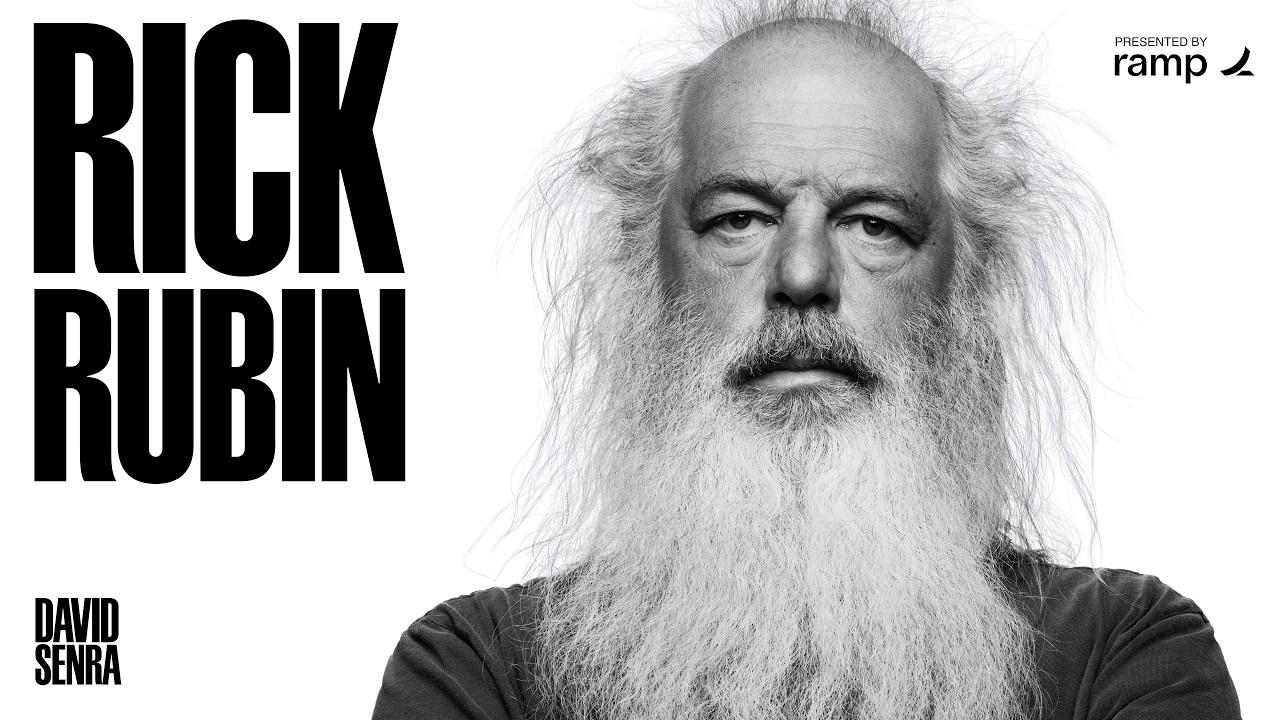
In an in-depth conversation set in an open outdoor patio, record producer Rick Rubin discusses his foundational creative philosophies with David Senra. Rubin explains that producing great art relies on radical subtraction: when elements are stacked excessively, each component loses impact, whereas stripping a track to a single guitar playing with personality1:02 exposes its singular essence. When founding Def Jam as an NYU dorm student, Rubin produced T La Rock's groundbreaking single It's Yours3:58 not with technical expertise, but by seeking an unvarnished documentary capture of downtown New York club energy, eventually labelling his contribution Reduced by Rick Rubin12:30 because true production meant stripping away clutter.
Rubin details the intense discipline required to refine raw output. Applying classical structures learned from listening to the Beatles14:25 transformed loose hip-hop rhymes into disciplined songs. With bands like the Red Hot Chili Peppers, he utilizes a ruthless editing process16:20 that cuts material down to forty percent before rebuilding to seventy percent based on collective voting. He contrasts the creative temperaments of top artists, noting that Eminem writes obsessively in notebooks20:24 full of rhymes that never reach songs, while Jay-Z absorbs instrumental tracks in silence1:02:10 before delivering finished verses off the top of his head in minutes.
Rubin challenges romantic notions of effortless creativity, describing himself as a lazy workaholic22:10 who must actively overcome reluctance every single day. He compares studio sessions to a patient day of fishing44:25, where long stretches of boredom and frustration precede an unrepeatable moment of studio revelation24:31. His career long-term survival stems from viewing himself not as an author with an ego, but as a servant facilitating magic. He credits meditation and deep listening33:32 for grounding him against the four pitfalls of sudden success1:14:03—drugs, alcohol, relationships, and megalomania.
Ultimately, Rubin advises creators to follow intuition over formulas, likening true craft to building a house atop an isolated mountain1:21:00 where no visitor can ever go. Because an artist must repeatedly listen to their work hundreds of times, the only sustainable metric is making something that satisfies oneself rather than attempting to predict an external audience's reaction.