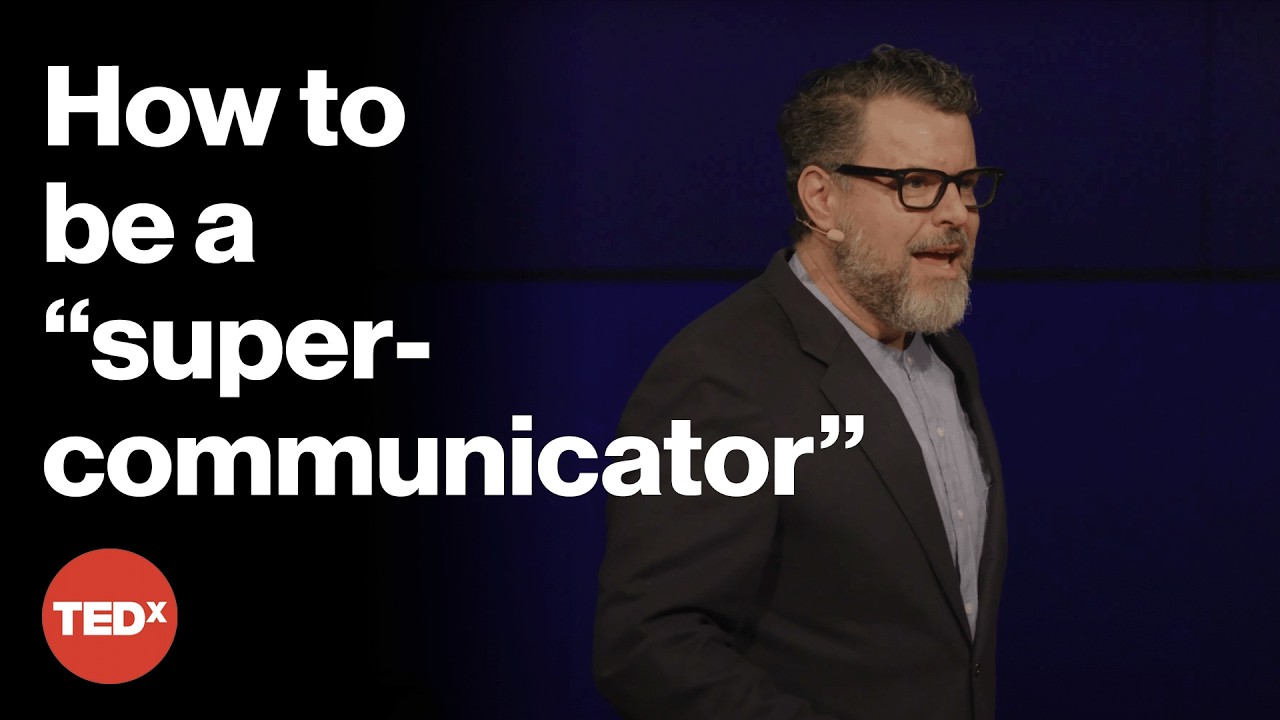
In this TEDx talk, Pulitzer Prize-winning journalist and author Charles Duhigg outlines why meaningful human connection often feels elusive and how understanding communication science can transform our interactions. He opens with an intimidating challenge: asking a total stranger when they last cried0:22. While most people instinctively recoil from such intimate vulnerability with someone they do not know, Duhigg argues that this kind of interaction produces profound interpersonal closeness.
Duhigg illustrates the root problem of poor communication through a recurring argument with his spouse during his tenure at The New York Times: returning home exhausted and venting1:08. When his wife offered sensible, pragmatic solutions like taking his boss to lunch, Duhigg became frustrated that she was not validating his feelings, while she grew exasperated that her advice was met with anger. Consultations with communication researchers revealed that what seems like a single conversation actually contains three distinct conversation types2:20: practical ("What is this really about?"), emotional ("How do we feel?"), and social ("Who are we?"). When two participants engage in conflicting types simultaneously—such as emotional venting met by practical troubleshooting—genuine communication collapses.
To bridge this divide, Duhigg introduces the Matching Principle3:20, a fundamental tenet in neurology and psychology stating that effective dialogue requires identifying which conversation is taking place and aligning with it. While teachers use the classroom shorthand "helped, hugged, or heard"3:40, everyday adults can achieve the same alignment through asking deep questions4:16. Rather than asking for biographical trivia (like where someone works or attended school), deep questions invite individuals to share how they feel about their life experiences and personal values, establishing reciprocal vulnerability.
This principle proved transformative for cancer surgeon Dr. Behfar Ehdaie5:28. Despite recommending active surveillance instead of invasive prostate surgery, Ehdaie's patients routinely ignored his counsel and opted for high-risk procedures. Advised by Harvard Business School researchers to stop assuming patients arrived solely seeking solutions, Dr. Ehdaie began asking a 62-year-old patient what his diagnosis meant to him7:56. The patient opened up about his deceased father and workplace anxieties. By spending eight minutes matching that emotional conversation before transitioning to medical options, Dr. Ehdaie successfully helped the patient choose active surveillance.
Duhigg circles back to Nicholas Epley's stranger experiment10:18 at the University of Chicago, showing that people consistently dread deep conversations yet rate them as among the most meaningful encounters of their year. Duhigg concludes that anyone can learn to become a supercommunicator12:10 by asking deep questions, matching conversational modes, and satisfying humanity's evolved need for connection.