Avail.video · Watched for you · 13:18 video · 2 min read

Body Language Is Your Superpower

Outlier score5,367×Breakout

20,003,452 views vs a median of 3,727 across the channel's last 15 long-form uploads · as of Oct 28

Avail.video calculation

Four Stanford students present actionable techniques for mastering nonverbal communication in public speaking. They outline foundational standing posture, three purposeful hand gesture types to maximize audience engagement and retention, and observational methods to read and re-energize an audience.

Read the teardown

How it earns the click and holds attention, second by second.

Find in this video

Search what was said and shown

One search covers the transcript, on-screen text, claims and references. Every result jumps to its moment.

    The explainer

    What the video says, with a link to every moment

    A 2-minute read. Each underlined phrase opens the video at that second.

    Effective public speaking relies heavily on nonverbal communication, which can either amplify a presenter's core message or undermine it completely. In this Stanford Graduate School of Business presentation, Matt Levy opens by reviewing the famous Michael Bay meltdown1:12 at Samsung's CES press conference. When the teleprompter failed, Bay's uncontrollable fidgeting, swaying, and turning his back on attendees demonstrated how visible anxiety completely distracts from content. Matt frames deliberate body language as a speaker's ultimate superpower before handing off to his teammates.

    First, Colin Bailie explains that communication begins before a speaker utters a single word. Presenters must choose a strong center-stage position3:30 rather than cowering in corners or standing near windows where traffic creates visual interference. Demonstrating with Jeong Joon, Colin critiques common bad habits: hands hidden in pockets looking nonchalant, hands on hips appearing domineering, and the defensive awkward fig leaf stance4:50 that looks like flashing when gesturing. To counter these habits, Colin leads the room through a base posture exercise5:30, having everyone stand hip-width apart, stretch their arms to the ceiling, and relax them naturally at their sides.

    slide
    Position matters
    ▶ 3:23
    On screen at 3:23

    Next, Jeong Joon Ha discusses the mechanics of gestures, noting that expressive hand gestures help listeners remember twice as much content6:29 while simultaneously boosting speaker recall. He categorizes impactful body language into three core types: the give gesture7:20 using open palms to share facts or options, the creative show gesture7:40 to visualize concepts congruently, and the chop gesture8:08 to emphasize decisive opinions. Citing research from Allan and Barbara Pease, he illustrates how palm-up requests yield 84% compliance9:26 compared to 52% for palm-down and only 28% for aggressive finger pointing, which he cautions against using Bill Clinton's finger wag9:46 and awkward dinosaur-like T-Rex arm movements.

    stat
    How About a Nice Hand?Palm Up: 84%Palm Down: 52%Pointing: 28%Source : Allan and Barbara Pease, The Definitive Book of Body Language
    ▶ 9:25
    On screen at 9:25

    Finally, Jennifer Rosenfeld shifts attention toward reading the audience, citing presentation expert Nancy Duarte's philosophy that the audience is the true hero10:38 while the speaker serves merely as their mentor. When audience members display boredom, slouching, or phone use, speakers must actively observe nonverbal cues and employ intervention strategies such as unexpected questions, humor, or direct engagement like cold-calling an audience member12:23 to refocus the room on their shared journey.
    slide
    You are the hero
    ▶ 10:44
    On screen at 10:44
    Highlights
    1. 1:12Michael Bay Samsung CES meltdown analysis
    2. 2:58Colin Bailie on speaker positioning and posture
    3. 6:22Jeong Joon Ha presents three gesture types
    4. 9:26Audience compliance research on hand orientations
    5. 10:28Jennifer Rosenfeld on reading and engaging the audience
    6. 12:54Concluding takeaway on body language as a superpower
    Chapters across the 13:18 runtime
    How it's told

    A student group lecture with audience participation

    Format: Lecture. Four Stanford graduate students take turns presenting practical body language techniques to a classroom. Their lecture combines negative celebrity examples, live posture resets, and audience interaction to illustrate effective public speaking.

    Story arc

    1. 0:05Introduction & HookMatt opens with what makes an exceptional presenter and analyzes Michael Bay's presentation meltdown.
    2. 2:56Posture & PositioningColin explains stage positions, common posture mistakes, and leads an audience stretch exercise.
    3. 6:23GesturesJeong Joon explains the give, show, and chop gestures, hand orientation data, and poor gesture habits.
    4. 10:29Audience Body LanguageJennifer covers reading the audience, observing engagement, and re-engaging them through surprises and cold calls.
    5. 12:54Conclusion & Q&AMatt summarizes the three key takeaways and opens the floor to audience questions.

    Setups and payoffs

    1. 0:54Setup Michael Bay clip teased as body language meltdown
      ↳
      1:13Payoff Clip played and dissected with commentary on posture and fidgeting
    2. 2:37Setup Three-point agenda introduced (posture, gestures, audience)
      ↳
      2:56Payoff Paid off sequentially by Colin, Jeong Joon, and Jennifer
    3. 7:33Setup Jeong Joon mentions palm orientation compliance data to come later
      ↳
      9:25Payoff Data slide reveals compliance stats for palms up, palms down, and pointing
    4. 10:44Setup Jennifer establishes the audience is the hero of the presentation
      ↳
      12:45Payoff Paid off with the Yoda-as-guide metaphor framing the speaker's role

    Devices

    • interactive exerciseColin has the entire audience stand up, look to the ceiling, raise arms, and reset into baseline posture.5:27
    • humorous demonstrationJeong Joon exaggerates awkward posture habits such as hands in pockets, hands on hips, and the fig leaf.4:335:07
    • celebrity counter-exampleAnalyzing Michael Bay's televised stage panic and Bill Clinton's aggressive finger wagging.1:129:45
    • audience cold-callJennifer demonstrates the disruption technique live by asking audience member Jason for his favorite color.12:22
    • pop-culture metaphorUsing Superman and Yoda/Luke Skywalker to frame the speaker-audience relationship.10:4412:45

    From the video's own structure, matched to the transcript and on-screen text.

    Teardown

    Institutional Stanford credibility combined with highly tactical, physically demonstrated public speaking rules makes this an enduring search-and-suggest hit.

    A breakout: 5,367× its typical views (20,003,452 vs a median of 3,727 across the channel's last 15 long-form uploads, as of Oct 28) · Long-form lecture · 4,549 days old

    The promise

    A viewer believes they will learn how to use body language to dramatically increase their influence and confidence in social and professional situations.

    Packaging

    How it looks in the feed

    Show the feed as
    13:18

    Make Body Language Your Superpower

    Stanford Graduate School of Business20M views · 12y agoBody language, both the speaker's and the audience's, is a powerful form of communication that is difficult to master, especially if the speaker is nervous…

    Views and age as of the teardown, Oct 28, 2026. Other videos are blanked out.

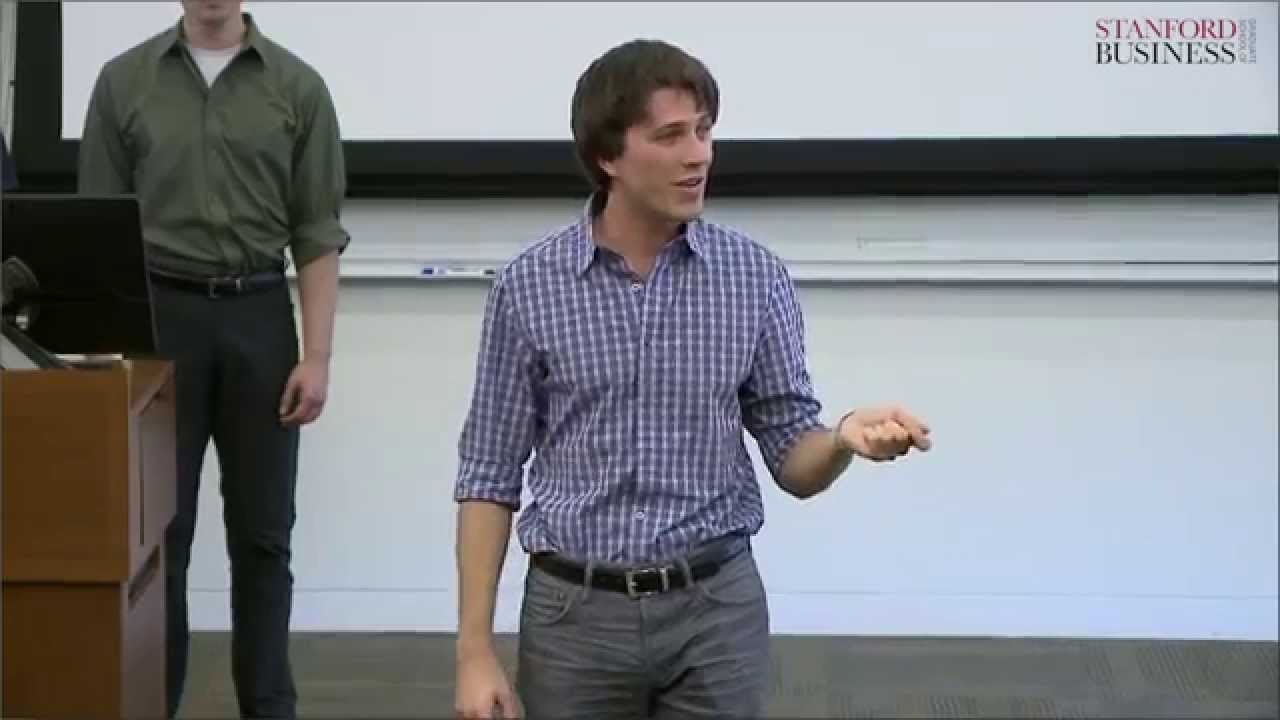
    • 2/5Thumbnail imageIt is an unedited video still from a classroom lecture. While the speaker's open-hand gesture establishes an active delivery, the framing, dull lighting, and background clutter lack visual punch.A presenter in a plaid shirt gestures mid-speech with a partially cropped person and a computer monitor visible behind him.
    • 1/5Thumbnail textThere is no custom text overlay to pitch or clarify the video. Only the university watermark appears in the corner.No text appears on the image aside from the Stanford Business logo in the top right.
    • 4/5TitleThe title clearly defines the subject and uses an aspirational metaphor to frame a common topic as an extraordinary skill. It is concise and instantly readable.The phrase uses five words: 'Make Body Language Your Superpower'.
    • 3/5Title + thumbnailThe title carries the entire hook, while the image simply confirms that the setting is an academic lecture. Together with the channel name, it establishes authority rather than creating visual intrigue.An aspirational title paired with a raw, unedited classroom presentation frame.

    Curiosity gap: How can subtle, everyday physical gestures be transformed into an unfair personal advantage?

    The three hooks

    The title, the thumbnail text and the first words spoken each make a promise, and each does a different job.

    • Title“Make Body Language Your Superpower”How-toOutcomeCuriosityIt makes the viewer want practical techniques to turn their physical habits into a dominant communication advantage.
    • Thumbnail textNo text on the thumbnail.
    • First words spoken“What makes one an exceptional presenter?”Curiosity gapCuriosityOutcomeIt forces the viewer to audit their own speaking skills and wonder which hidden variable separates elite communicators from everyone else.
    • PairingNo thumbnail textThe image relies on the raw lecture footage and institutional branding, leaving the title to do all the heavy lifting.
    • StakesFitsThe video delivers exact, usable physical techniques to avoid public embarrassment and command professional authority.
    • UrgencyNoneThe material is evergreen communication training framed around skill acquisition rather than a time-limited event.

    The first 20 seconds

    TimeWhat you seeWhat you hearWhat it does
    0:00Stanford Graduate School of Business logo on a white screen.Soft electronic chime.Establishes brand credibility and institutional authority.
    0:01Stanford logo stays on screen.Chime sustained.Reinforces brand recognition.
    0:02Stanford logo begins fading out.Chime decays into silence.Prepares transition to the live room.
    0:03White screen fading out.Silence.Bridges into the presentation.
    0:04Fade transition into a tiered university lecture room.Faint room tone.Establishes an authentic classroom speaking environment.
    0:05A speaker walks away from the podium toward center stage while teammates stay behind.Footsteps and room ambience.Draws attention to the lone presenter entering the floor.
    0:06Speaker steps into the center of the floor facing the audience."What makes one..."Opens immediately with a direct question.
    0:07Speaker opens his arms wide."...an exceptional..."Physical gesture emphasizes the scope of the question.
    0:08Speaker holds open posture toward the classroom."...presenter?"Delivers the core hook question of the session.
    0:09Speaker relaxes his arms to rest position.Brief silence.Allows the audience to process the question.
    0:10Speaker raises his left hand outward."Is it flashy visuals?"Poses the first common assumption to test.
    0:11Speaker gestures subtly while scanning the room.Brief pause.Gives time to mentally evaluate visual aids.
    0:12Speaker turns hands upward; red lower-third appears: "Matt Levy - MA 2014 IPS"."Is it..."Introduces the speaker's name and academic credential.
    0:13Speaker gestures toward his chest."...the tone of voice?"Presents vocal delivery as the second hypothesis.
    0:14Speaker drops hands and resets.Short pause.Keeps a measured, deliberate rhythm.
    0:15Speaker extends both hands forward."Is it the actual message..."Suggests substance and script as the third option.
    0:16Speaker holds open hands in front of him."...or content?"Completes the list of traditional presentation elements.
    0:17Speaker pauses and looks directly at the audience.Short pause.Builds anticipation right before the reveal.
    0:18Speaker brings hands inward and leans slightly forward."Or does it have something to do..."Signals the contrarian pivot.
    0:19Speaker circles hands near his chest; lower-third disappears."...with body..."Introduces the core topic from the video title.
    0:20Speaker gestures dynamically with both hands."...language..."Lands the thesis connecting body language to elite presenting.
    Click confirmation
    The video opens with a 5-second Stanford Business logo card, then cuts to a lecture room where the speaker mentions 'body language' at 00:19, confirming the title's core premise within twenty seconds.
    Time to the point
    0:19
    Hook
    question
    Reason to stay
    The speaker challenges standard beliefs about what makes presentations work (slides, voice, content) and tees up body language as the hidden differentiator.
    Missing on purpose
    No informal greeting, no self-introduction before speaking, and no request to like or subscribe.
    Pace and texture
    Steady, locked-off master shot in a lecture room with slow, deliberate vocal cadence and a single lower-third graphic.

    Story map

    Tutorial. Presenters want to persuade and lead audiences, but unconscious physical mannerisms ruin credibility; mastering stage positioning, hand gestures, and audience awareness unlocks commanding influence.

    TimeSectionNew tensionStakesTurnLoops
    0:00 –2:56Hook & The Michael Bay Case StudyWhy do smart people crash and burn when presenting?RisePresentations aren't won on slides alone; therefore, bad physical habits can derail your entire message.Opens: What physical behaviors ruin a presentation?Closes: Shows Michael Bay freezing on stage at CES as proof.
    2:56 –6:16Posture & Stage PositioningWhere do you stand and how do you prevent looking awkward or defensive?HoldKnowing where to stand is only half the battle; but you also need a physical baseline posture.Opens: How should an elite speaker stand at rest?Closes: Teaches the ceiling stretch reset into baseline posture at 05:45.
    6:16 –10:26The Three Hand Gestures & Orientation DataWhat should you actively do with your hands to persuade rather than distract?RiseMoving hands helps retention; but bad orientations like pointing trigger defiance.Opens: Which specific hand orientations actually yield audience compliance?Closes: Reveals the 84% vs 52% vs 28% compliance statistics at 09:25.
    10:26 –12:54Reading & Controlling the RoomWhat happens when your audience tunes out despite your good habits?HoldFocusing on your own body isn't enough; therefore you must monitor audience posture and disrupt boredom.Opens: How do you wake up a drifting room?Closes: Demonstrates disruptive re-engagement via cold-calling at 12:22.
    12:54 –13:18Conclusion & Wrap-UpHow do these separate tactical rules unite into a personal habit?FallSag: no turnOpens: None.Closes: Recaps posture, gestures, and audience awareness.

    Payoff: delivered fully at 9:25. The core promise of practical body language rules is paid off throughout, culminating at 09:25 with hard comparative compliance data for specific hand positions. Ending: A concise three-point summary followed by an invitation for in-room audience Q&A before cutting to the Stanford outro card.

    Leaks

    Where a viewer might leave. Guesses from watching, not retention data.

    • 0:00 Five full seconds of a static white Stanford bumper before any classroom action appears.
    • 2:37 A student-style transition slide and team handoff breaks narrative momentum into an academic group project cadence.
    • 11:00 Theoretical framing about the 'hero's journey' and Duarte concepts slows down the rapid-fire physical demonstrations.

    Steal this

    1. Dissect a recognizable celebrity public failure frame-by-frame to prove why the topic matters. It takes an abstract concept like anxiety and grounds it in observable, cringeworthy reality that viewers fear repeating. 1:12
    2. Force physical participation to give the viewer an immediate somatic reset. Getting the room (and remote viewer) to look up, stretch, and drop arms creates a physical benchmark they remember in their muscles. 5:27
    3. Deliver a simple, three-part named taxonomy for hand movements. Naming them simply ('the give, the show, the chop') makes an overwhelming habit easy to memorize and implement instantly. 7:00
    4. Back up behavioral advice with a hard comparative metric slide. Showing concrete compliance rates (84% palms up vs 28% pointing) transforms soft etiquette advice into hard tactical science. 9:25

    Skip this

    • Relying on an unedited group classroom presentation format with handoffs between four student speakers. This works here only because the Stanford Graduate School of Business channel provides massive institutional authority that substitutes for production value.

    Open questions

    • What specific external virality or corporate training citations drove the 20 million views over its decade-long shelf life?
    • How much does viewer retention dip during the multi-speaker handoff points (e.g., 02:53, 06:16, 10:26)?

    Teardown by Avail.video from the thumbnail, the title, the first 20 seconds and the report's notes on the whole video.

    On screen

    Everything the video showed you

    Slides, frameworks, quotes and formulas, captured verbatim with the moment they appeared. Tap any card to jump there.

    Reference shelf

    People, ideas and things mentioned

    Said means mentioned aloud; Shown means it appeared on screen.

    People9

    • Matt LevyStanford graduate student and opening and closing presenter.0:06Said + shown1:13Said + shown1:53Said + shown12:54Said + shown13:04Said + shown
    • Michael BayAmerican film director analyzed as an example of stage freeze.0:40Said0:54Said1:12Said + shown1:54Said + shown
    • Colin D. BailieStanford PhD student presenting on posture and stage positioning.2:38Said + shown2:54Said + shown2:57Said + shown3:10Said + shown
    • Jeong Joon HaStanford MSx graduate student presenting on effective hand gestures.2:43Said + shown4:24Said + shown6:21Said + shown6:26Said + shown
    • Allan and Barbara PeaseAuthors and researchers on nonverbal communication.9:26Shown
    • Bill Clinton42nd President of the United States, shown wagging his index finger.9:45Said + shown
    • Jennifer RosenfeldStanford MBA student presenting on reading and managing audience body language.2:47Said + shown10:28Said + shown10:30Said + shown10:34Said + shown
    • JasonAudience member cold-called by Jennifer during a live demonstration.12:22Said
    • Nancy DuartePresentation author and CEO credited with the audience-as-hero concept.12:43Said

    Ideas & frameworks2

    • The Definitive Book of Body LanguageBook on nonverbal communication cited for audience compliance statistics.9:26Shown
    • Yoda and Luke SkywalkerStar Wars mentor-hero relationship archetype used as a speaking framework.12:45Said + shown

    Organizations2

    • Stanford Graduate School of BusinessGraduate business school of Stanford University where the presentation took place.0:00Shown7:07Said13:13Shown
    • SamsungMultinational electronics company hosting the press event where Michael Bay froze.1:13Shown

    Things on screen1

    • Barney the DinosaurChildren's television character used to illustrate awkward short-arm T-Rex gestures.9:59Shown
    Video description

    A description you can paste into YouTube

    A hook, a summary, chapters in YouTube's format and what the video mentions. Copy it, edit it, and paste it into YouTube Studio.

    1,201 / 5,000 characters
    By the numbers

    What YouTube shows about this video and its channel

    As of Oct 28, 2026. YouTube's public numbers first, then Avail.video's own arithmetic on them.

    The video

    Views
    20M
    Likes
    475K
    Comments
    7.4K
    Published
    May 14, 2014
    Length
    13:18
    Category
    Education
    YouTube's topics
    Knowledge
    Captions
    No
    HD
    Yes
    Language
    —
    Paid promotion
    None declared
    Made for kids
    No
    License
    Standard YouTube

    Creator's tags

    • body language
    • nonverbal communication
    • movement
    • gestures
    • stanford
    • stanford gsb
    • expressions
    • b school
    • eye contact
    • public speaking
    • socializing
    • social skills
    • charismatic
    • psychology
    • communication skills

    The channel

    Subscribers
    2.8M
    Videos
    3.9K
    Total views
    206.2M
    Channel age
    17 years (since Nov 2008)
    Country
    United States
    Uploads
    about every day
    Across the last 15 long-form uploads
    Before this video
    —

    Calculated by Avail.video from YouTube's public numbers

    Outlier score
    5,367× · Breakout
    Views against the median of the channel's last 15 long-form uploads
    Views per subscriber
    7.12
    Likes vs the channel's usual
    —
    Comments vs the channel's usual
    1.8× the channel's usual
    0.037% of views vs a usual 0.021%
    Rank among recent uploads
    #1 of 16
    By views: this video and the channel's last 15 long-form uploads
    Take it to your AI

    Ask Claude or ChatGPT about this video

    Copy this report as context, paste it into a chat, then ask anything. It includes timestamps, so answers can point back to the video.

    Then ask
    • Turn the main ideas into a checklist I can use this week.
    • What are the strongest claims in this video, and what evidence does it give for each?
    • Write a short summary for someone who hasn't watched it, linking the key moments.
    • Quiz me on this video, one question at a time, and cite the timestamp for each answer.

    Watched by Avail.video · 2026-10-28