Avail.video · Watched for you · 1:16:58 video · 2 min read

Mark Rober on Spending $60M, Scaling CrunchLabs, and Navigating Netflix

Outlier score1.6×Above typical

255,758 views vs a median of 155,921 across the channel's last 9 long-form uploads · as of Oct 28

Avail.video calculation

Mark Rober and CrunchLabs Chief Content Officer Scott Lewers join Colin and Samir to discuss their ambitious $60 million open-source STEM curriculum, Class CrunchLabs, designed for grades 3 to 8. Rober and Lewers explain the balance between maintaining authentic creative storytelling and adopting studio rigor as their team scales to over 50 employees across YouTube, subscription toys, and upcoming Netflix series. Rober also reflects on why genuine honesty must drive content creation over wealth and fame, his daily fitness habits, and the foundational influence of his late mother.

Read the teardown

How it earns the click and holds attention, second by second.

Find in this video

Search what was said and shown

One search covers the transcript, on-screen text, claims and references. Every result jumps to its moment.

    The explainer

    What the video says, with a link to every moment

    A 2-minute read. Each underlined phrase opens the video at that second.

    In this extensive interview on The Colin & Samir Show, YouTuber and former NASA engineer Mark Rober appears alongside CrunchLabs Chief Content Officer Scott Lewers to unpack the evolution of the Mark Rober media empire. A central topic is their initiative, Class CrunchLabs1:18, a comprehensive third-to-eighth-grade science curriculum built with 30 veteran science teachers. Rober clarifies that the reported $60 million price tag is funded by philanthropic donors rather than his personal pocket, but demands a massive time commitment: one week every month for the next four years. He emphasizes that overcoming the "motivation gap" requires capturing student attention before delivering academic concepts, using high-impact demos like destroying watermelons with MRI magnets6:02 to make learning memorable and open-source.

    Lewers, a former Discovery Channel executive who met Rober during a Shark Week collaboration10:05, outlines how he joined CrunchLabs to inject traditional television structure into an agile creator studio. Managing an operation that now exceeds 50 full-time employees, Lewers helped establish budget tracking and operational guardrails to prevent runaway costs, including an infamous incident where the studio spent $65,000 training a rat to drive a car1:01:20. This newfound discipline allowed the team to complete a mainline video two days ahead of schedule59:55 for the first time in fifteen years, freeing Rober from administrative stress to focus exclusively on creative ideation and video design.

    Rober and Lewers also explore the changing media landscape as creators expand into television and streaming. Rober details his expansion to Samsung TV Plus and Netflix31:05, including an upcoming high school competition series titled Schooled, while maintaining that YouTube remains their indispensable foundation. They discuss the power of live television, referencing Rober's co-hosting role during Alex Honnold's Taipei 101 climb41:50. Rober notes that while platforms change and YouTube thumbnail algorithms favor close-up faces52:10, the emotional core of content must never compromise on authenticity and honesty.

    Closing the conversation, Rober shares philosophical reflections on career longevity and personal life. He argues that chasing wealth or fame1:04:45 is the quickest path to misery, urging aspiring creators to make videos simply out of genuine curiosity. Reflecting on a childhood photograph1:07:28 of himself cutting vegetables in safety goggles, Rober credits his late mother for encouraging unrestrained creativity, noting that his true measure of success is generational impact rather than personal legacy. He attributes his sustained drive to structured work ethics and his rigorous daily workout routine1:10:55, proving that disciplined habits unlock long-term creative execution.
    Highlights
    1. 1:18Explaining the $60M Class CrunchLabs curriculum
    2. 31:05Announcing the Netflix competition show Schooled
    Chapters across the 1:16:58 runtime
    How it's told

    A studio podcast interview examining creator empire scaling

    Format: Interview. Colin and Samir interview Mark Rober and CrunchLabs Chief Content Officer Scott Lewers on transitioning from solo creator to scalable studio. The discussion balances operational rigor and multi-platform distribution against authentic storytelling and creative integrity.

    Story arc

    1. 0:00Cold OpenThe hosts tease key conversation moments, including creative burnout, the stigma against YouTube in Hollywood, and finishing edits early.
    2. 1:02Class CrunchLabsMark explains his $60 million privately funded initiative to produce hands-on, standards-aligned science curriculum and distribute it free to teachers.
    3. 7:33Viral Attention ThesisMark breaks down his storytelling mechanics, explaining how creating visceral emotional reactions earns the right to teach STEM principles.
    4. 9:21Executive CCO IntegrationScott Lewers recounts transitioning from Discovery Channel to CrunchLabs to manage business execution and operational rigor.
    5. 14:24Sponsor SegmentThe hosts demonstrate Shopify agentic storefront tools and discuss creator commerce integrations.
    6. 15:51Scaling ProductionThe group explores how growing a team past 50 employees risks corporate sterility, and how Mark maintains his genuine personal voice.
    7. 24:05Industry Slop & EquityA critical critique of private equity buying creator channels and turning content into formulaic commodities.
    8. 30:08Multi-Platform DistributionMark explains why YouTube remains the core engine while Netflix shows like Schooled serve as top-of-funnel discovery for CrunchLabs.
    9. 41:42Spectacle & HonestyReflecting on Alex Honnold's live climb, Mark and Scott contrast corporate ideas of 'authenticity' with radical creative honesty.
    10. 48:38Production RealitiesThe panel discusses thumbnail A/B testing, upload cadences, Shorts algorithms, and an expensive failed rat-training stunt.
    11. 1:03:08Advice for CreatorsMark warns that starting YouTube for fame or money brings misery, advising creators to focus on genuine curiosity and problem solving.
    12. 1:07:17Mother's LegacyMark reflects on losing his mother to ALS right before starting YouTube and how her memory shapes his drive and definition of impact.
    13. 1:13:08Creator Economy FutureThe interview concludes with praise for YouTube's meritocratic democratization of media compared to traditional Hollywood gatekeeping.

    Setups and payoffs

    1. 0:05Setup Mark Rober teases that there are 10,000 good reasons to start a YouTube channel, but only two bad ones.
      ↳
      1:04:43Payoff Mark reveals the two bad reasons are chasing wealth and chasing fame, which consistently breed unhappiness.
    2. 0:23Setup Colin asks what Scott Lewers actually does on a day-to-day basis as Chief Content Officer.
      ↳
      10:01Payoff Scott and Mark detail Scott's responsibilities managing negotiations, production schedules, and business operations.
    3. 0:32Setup Mark notes that for the first time in 15 years his team finished an edit two days ahead of upload.
      ↳
      1:00:00Payoff Mark unpacks the Beckham 'first date' video production schedule and how studio planning saved time.
    4. 0:48Setup Mark teases an absurd production disaster known as the 'rat story'.
      ↳
      1:01:32Payoff Mark recounts spending $65,000 over seven months attempting to train a rat to drive a miniature car before abandoning it.
    5. 18:20Setup Samir highlights a behind-the-scenes moment of an assistant holding an umbrella over Mark on set.
      ↳
      1:03:39Payoff The group revisits the umbrella anecdote as a humorous symbol of over-professionalizing YouTube productions.

    Devices

    • Hook-and-Hold PreviewRapid-cut soundbites of provocative statements, financial numbers, and anecdotes before introducing the full interview.0:000:52
    • Anecdotal Origin StoryUsing a personal observation of a colleague's child watching decades-old Bill Nye clips to justify a $60 million STEM curriculum.1:332:05
    • Metaphorical FramingReferring to high-level engineering education as 'hiding the vegetables' inside explosive, viral entertainment spectacles.1:533:39
    • Prop DemonstrationSamir uses an iPad on the desk to show historical photos, thumbnails, and headlines to prompt real-time guest reflections.17:4452:001:07:26
    • Contrast CuttingInterweaving podcast conversational studio footage with archival build clips, science stunts, and home photos.2:186:051:04:25
    • Philosophical Re-framingDiscarding the overused creator term 'authenticity' in favor of 'honesty' when evaluating stunts and audience trust.45:5147:00

    From the video's own structure, matched to the transcript and on-screen text.

    Teardown

    A huge financial headline and rapid cold-open soundbites earn the initial click, while Mark Rober unpacking the exact operational machinery of his 50-person studio holds creator-economy viewers across a long sit-down chat.

    Above the channel's typical: 1.6× its typical views (255,758 vs a median of 155,921 across the channel's last 9 long-form uploads, as of Oct 28) · Long-form interview · 167 days old

    The promise

    Viewers expect to discover the details of Mark Rober's massive new $60 million venture and what he plans to build after his YouTube success.

    Packaging

    How it looks in the feed

    Show the feed as
    1:16:58

    Mark Rober's $60 Million Dollar Experiment

    Colin and Samir255K views · 5mo agoStart your store on Shopify: http://shopify.com/colinandsamir Today on The Colin and Samir Show we’re joined by Mark Rober, the former NASA engineer turned…

    Views and age as of the teardown, Oct 28, 2026. Other videos are blanked out.

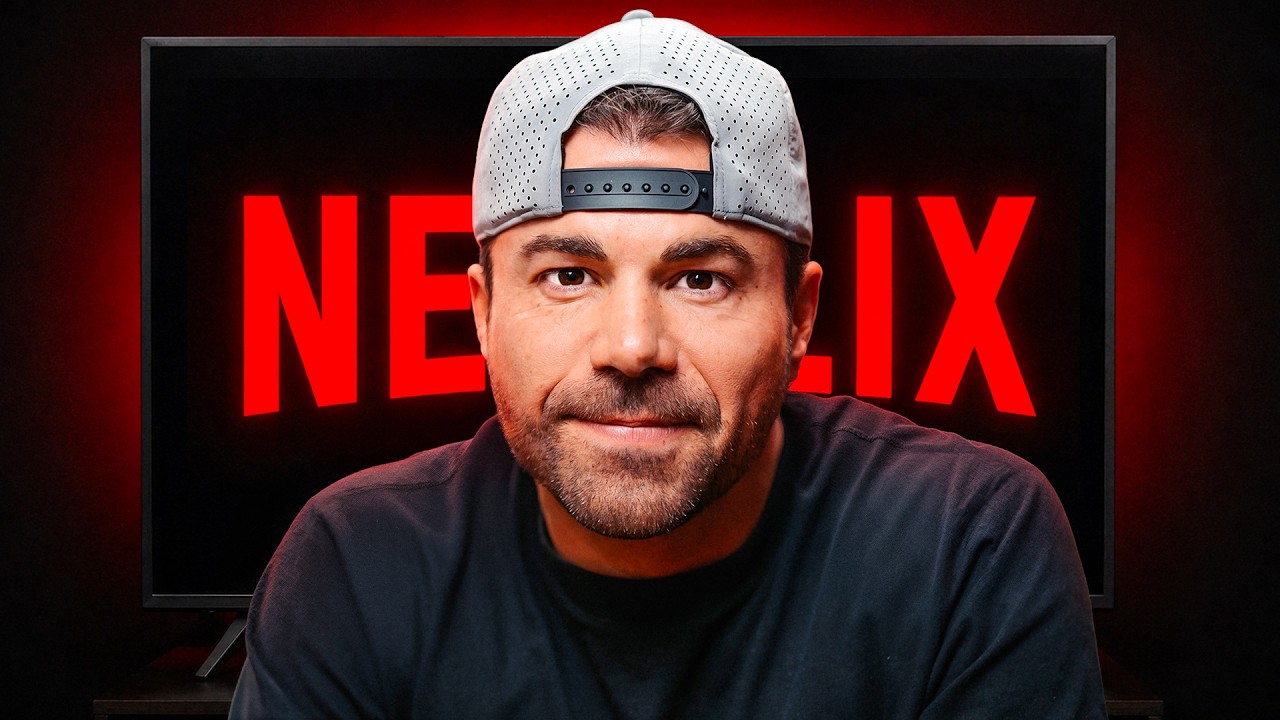
    • 4/5Thumbnail imageA crisp, high-contrast close-up of Mark Rober anchors the frame instantly. The pitch-black studio background and podcast microphone establish an intimate, high-stakes interview setting.A high-resolution portrait of Mark Rober looking into the lens with a subtle smirk and a microphone head visible in the lower left against pure black.
    • 4/5Thumbnail text“What's Next?”Two words in high-contrast yellow and white create an open-ended question that prompts a double-take. It is brief enough to read at any screen size without cluttering the face.'What's' in white stacked above 'Next?' in black lettering inside a yellow highlight block.
    • 5/5TitleThe title uses an undeniable authority name paired with an astronomical dollar figure. It frames the subject's business move as an 'experiment,' staying consistent with his science identity.The exact wording 'Mark Rober's $60 Million Dollar Experiment'.
    • 5/5Title + thumbnailThe thumbnail and title divide the work cleanly: the image asks an open future question while the title supplies the massive financial stake. Together they frame a turning point in a superstar creator's career.Thumbnail text asks 'What's Next?' right beside a title detailing 'Mark Rober's $60 Million Dollar Experiment'.

    Curiosity gap: Viewers know Mark Rober is risking sixty million dollars on something new, but they must click to find out what the project actually is.

    The three hooks

    The title, the thumbnail text and the first words spoken each make a promise, and each does a different job.

    • Title“Mark Rober's $60 Million Dollar Experiment”Insider secretCuriosityProofIt makes the viewer want an inside look at a massive, secretive sixty-million-dollar investment.
    • Thumbnail text“What's Next?”Curiosity gapCuriosityNoveltyIt makes the viewer want to find out the next chapter of Mark Rober's career.
    • First words spoken“There are probably 10,000 good reasons to start a YouTube channel, to make content, there's only two bad ones.”Contrarian takeCuriosityNoveltyIt sets up an open curiosity gap by asserting that out of 10,000 valid motivations to make content, there are two fatal traps you must avoid.
    • PairingDifferent jobsThe thumbnail asks where Mark Rober is going next, while the title provides the specific financial scale of his new project.
    • StakesFitsThe video honestly unpacks Mark Rober's real $60 million educational venture and outlines the practical costs of scaling an independent production studio.
    • UrgencyNoneThe interview presents a career-reflective retrospective and business breakdown without creating any artificial time-sensitive FOMO.

    The first 20 seconds

    TimeWhat you seeWhat you hearWhat it does
    0:00Close-up of Mark Rober speaking into a podcast microphone with bold white text overlay reading 'There are'.Mark Rober: 'There are'Establishes Mark Rober immediately as the speaker and hooks viewer attention with bold kinetic typography.
    0:01Mark Rober continues gesturing; text updates to 'There are probably'.Mark Rober: 'probably'Builds anticipation toward the central thesis statement.
    0:02Text animates to '10,000'. Mark gestures with his hand.Mark Rober: '10,000'Introduces a high number hook to frame the scale of his point.
    0:03Wide two-shot showing Mark Rober and the interviewer; text reads '10,000 good reasons to'.Mark Rober: 'good reasons to start'Reveals the interview setting while keeping the audience focused on the premise.
    0:04Text completes: '10,000 good reasons to start a YouTube Channel'.Mark Rober: 'a YouTube channel, to make content,'Delivers the topic: starting a YouTube channel and creating content.
    0:05Cut back to close shot of Mark Rober; large text overlays '2 bad ones there's only'.Mark Rober: 'there's only two bad ones.'Sets up a contrarian tension and open curiosity loop: what are the two bad reasons?
    0:06Mark holds up two fingers in emphasis.Mark Rober: 'And the'Reinforces the contrast between 10,000 good reasons and only two bad ones.
    0:07Mark looks directly across at the interviewer.Mark Rober: 'bad ones are—'Builds micro-suspense right before the reveal.
    0:08B-roll cut of the Hollywood sign on the hill under a clear sky.Mark Rober: 'Hollywood.' (with dramatic sound boom)Names the villain/target of the conversation with punchy visual proof.
    0:09Cut to Samir speaking into a microphone, gesturing with both hands.Samir: 'That industry'Shifts perspective to the host unpacking the Hollywood vs. YouTube dynamic.
    0:10Samir continues speaking from his chair.Samir: 'for a long time kind of'Frames the historical tension between traditional media and digital creators.
    0:11Cut to a graphic of The Hollywood Reporter article headline.Samir: 'put off'Provides third-party journalistic evidence validating the topic's industry relevance.
    0:12Headline zooms in: 'There Is Still a Stigma Against YouTube' highlighted in yellow.Samir: 'YouTube.'Presents direct proof of Hollywood's bias against digital creators.
    0:13Camera slowly pulls out from the highlighted Hollywood Reporter headline.Samir: 'But now,'Prepares the pivot from past stigma to current disruption.
    0:14Cut back to Samir in the studio smiling and gesturing.Samir: 'you know, we do see you on Netflix.'Points out the breakthrough irony that Mark crossed over into streaming.
    0:15Screenshot of Netflix interface showing 'Mark Rober's CrunchLabs'.Subtle transition sound effect.Visual proof of Mark Rober's crossover mainstream production.
    0:16Wide two-shot of Mark and his co-creator/producer listening to off-screen question.Off-screen voice: 'Creators weren't'Brings the focus back to how creator studios operate differently from traditional ones.
    0:17Mark begins explaining animatedly with open palms.Mark Rober: 'production studios, and you brought these professionals in'Introduces the central clash of bringing Hollywood pros into a creator ecosystem.
    0:18Mark makes a sweeping gesture to illustrate traditional industry mindsets.Mark Rober: 'who were like, "This is how—"'Sets up the conflict between old-school film crews and lean creator methods.
    0:19Closer shot of Mark clenching his fist to mimic rigid traditional production.Mark Rober: 'who were like, "This is how—"'Heightens emotional engagement through expressive body language.
    0:20Mark continues talking with intent focus.Mark Rober continuing to explain the conflict.Hooks the audience into hearing how Mark disrupted traditional production rules.
    Click confirmation
    Yes. Mark Rober is visible in frame 1, and the conversation immediately tackles his transition from YouTube creator to major production player.
    Time to the point
    0:08
    Hook
    bold claim, contrarian take
    Reason to stay
    Mark Rober claims Hollywood is the wrong reason to do YouTube, yet he just crossed over onto Netflix—viewers stay to hear how he beat traditional studios at their own game.
    Missing on purpose
    No show intro, no podcast branding card, no polite greetings, and no sponsor reads—dives straight into high-stakes industry commentary.
    Pace and texture
    Fast and punchy: cuts occur every 1 to 3 seconds with animated text, headline b-roll, interface screenshots, and rhythmic sound design.

    Story map

    Explainer. Mark Rober wants to scale his science entertainment from viral YouTube stunts into an enduring, multi-platform institution without losing the handmade charm and honesty that built his audience. To pull it off, he brings in an ex-Discovery executive to manage corporate operations so he can stay purely creative.

    TimeSectionNew tensionStakesTurnLoops
    0:00 –1:04Cold Open TeasersCan Mark Rober jump to Netflix and build an industrial studio without selling out to Hollywood?RiseMark teases that Hollywood is one of the only bad reasons to start a channel, but reveals he is now making Netflix shows.Opens: What are the two bad reasons to start YouTube? What is the $65,000 rat story?
    1:04 –7:05The $60M Class CrunchLabs InitiativeIs Mark risking his entire fortune on an unproven curriculum gamble?HoldThe headline implies Mark spent his own $60 million, but he clarifies that wealthy donors funded it so he could give it away free.Opens: Can entertainment storytelling actually work in public school classrooms?Closes: What the $60 million experiment actually is.
    7:05 –9:30The Science of Attention and ViralityHow do you teach heavy engineering concepts to an easily distracted audience?RiseYou cannot reason with someone until you touch their emotions, so explosive stunts are used as trojan horses to deliver physics.Opens: How does Mark maintain this emotional bar when producing dozens of videos a year?
    9:30 –14:20Bringing in TV Muscle (Scott Lewers)Can a traditional television executive fit into an agile, DIY creator company without ruining it?RiseMark historically rejected TV offers because they took away creative control, but hired Scott after Scott proved his value on Shark Week.Opens: How does Scott stop the main YouTube channel from hemorrhaging seven figures?Closes: Why an ex-Discovery boss is sitting at the table.
    14:20 –15:50Sponsor: ShopifyHow do creators adapt their product sales to AI search engines?FallSag: no turn
    15:50 –24:20Scaling Production Without Losing the HeartDoes growing past 50 staff members turn a beloved YouTuber into a sterile corporate manager?RiseMark refuses to manage employees or sit in financial meetings, outsourcing all operational headaches so he only brainstorms builds.Opens: Will audiences reject creator content if it feels too much like TV?
    24:20 –31:00Private Equity, Industry Slop, and Creative ControlWhy are viewers turning against high-budget creator channels?HoldAudiences miss the raw solo creator, yet vintage DIY videos would fail to hold modern audience attention today.Opens: How does Mark balance small iPhone videos with multi-million dollar sets?
    31:00 –37:00Branching Out to Netflix and FAST StreamingDoes moving onto streaming giants undercut the original YouTube core?HoldStreaming deals provide massive discovery and funding for episodic formats, but YouTube remains the untouchable lifeblood.Opens: Can YouTube ever host multi-million dollar episodic series itself?
    37:00 –42:10Spectacle Television and Algorithmic RealitiesShould creators invest in short-form content when algorithms cut off viewership after two weeks?FallShorts deliver billions of views, but short algorithm shelf-lives force Mark to dial back high-budget vertical production.Opens: How does Mark protect his family while remaining famous?
    42:10 –46:50The Thumbnail Evolution and Parasocial BoundariesWhy must creators put giant face reactions on every thumbnail in the abundance era?HoldMark avoids personal parasocial sharing, yet AB testing proves his face on a thumbnail is mandatory to stop viewer scrolling.
    46:50 –57:10Budget Discipline and the $65K Rat StoryWhat happens when an engineer with unlimited ambition has no executive guardrails?RiseThe team spent $65,000 and seven months trying to teach a rat to steer a toy car before Scott killed the experiment.Closes: The cold open rat story tease.
    57:10 –1:07:10Honesty in Creation vs. Fame and FortuneWhat ruins emerging creators before they even start?HoldStarting YouTube to get rich or famous guarantees misery; only genuine curiosity keeps a creator from burning out.Closes: The cold open tease about the two bad reasons to start a channel.
    1:07:10 –1:16:58Mother's Legacy and Closing ReflectionsWhat emotional engine drives Mark to work 70-hour weeks despite having all the money he needs?HoldLosing his mother to ALS before his channel took off focused his mission on encouraging kids rather than accumulating wealth.

    Payoff: delivered fully at 2:18. Mark immediately clarifies the $60 million title promise within the first three minutes, explaining it is an open-source, donor-funded school curriculum called Class CrunchLabs rather than a risky gamble of his own money. Ending: The interview ends on an earnest celebration of YouTube's meritocracy over traditional Hollywood gatekeeping, leaving the audience with an inspiring wrap-up rather than a hard cliffhanger for a next episode.

    Leaks

    Where a viewer might leave. Guesses from watching, not retention data.

    • 14:20 A hard pivot into a mid-roll Shopify plug with technical AI ecommerce terminology breaks conversational momentum right after discussing OceanGate.
    • 37:45 The hosts and guests launch into a prolonged debate on YouTube Shorts shelf-life and algorithmic payout changes that drags on for several minutes without a concrete narrative hook.
    • 1:10:35 The conversation shifts away from high-level creator business strategy into generic physical workout splits and daily protein targets.

    Steal this

    1. Multi-Loop Cold Open Carousel Cutting rapid 3-second soundbites of high-voltage phrases across different beats forces the viewer to stay until each unrelated tease gets resolved. 0:00
    2. Immediate Title Deflation & Reframing Address the clickbait headline head-on in the opening minute so the audience feels respected, then pivot that shock value into an even more impressive operational story. 1:18
    3. Tactile iPad Visual Prompts Handing an iPad across the desk displaying an embarrassing old photo, a failed thumbnail, or a press headline breaks conversational autopilot and extracts genuine guest emotion. 52:00

    Skip this

    • Relying on a 76-minute conversational podcast format to rack up hundreds of thousands of views. This works because Colin & Samir have spent years establishing their studio as the definitive trade show for top creators, and Mark Rober is an A-list household name.
    • Teasing an expensive production failure ($65,000 on rat training) as a casual throwaway joke. Only a business with massive secondary revenue from subscription kits and donors can blow five figures on an abandoned bit without risking solvency.

    Open questions

    • What was the exact retention drop-off during the extended middle discussion about YouTube Shorts algorithm tweaks?
    • How much of the initial 255k viewership came from browse versus search queries around Mark Rober's Netflix show casting announcement?

    Teardown by Avail.video from the thumbnail, the title, the first 20 seconds and the report's notes on the whole video.

    On screen

    Everything the video showed you

    Slides, frameworks, quotes and formulas, captured verbatim with the moment they appeared. Tap any card to jump there.

    Reference shelf

    People, ideas and things mentioned

    Said means mentioned aloud; Shown means it appeared on screen.

    People10

    Organizations5

    • CrunchLabsMark Rober's STEM entertainment company producing subscription build boxes and educational media.0:15Shown1:18Said4:00Shown14:20Said + shown17:52Shown26:08Shown
    • NetflixGlobal streaming service partnering with Mark Rober on specials and unscripted series.0:14Said + shown19:14Shown22:43Shown27:14Shown31:05Said
    • YouTubePrimary digital video platform hosting Mark Rober's flagship channel.0:00Shown0:04Said0:11Shown14:14Shown24:55Shown35:30Said
    • ShopifyE-commerce platform sponsoring the episode, showcased for its AI agentic storefronts.0:58Said + shown13:38Shown14:20Said + shown
    • Discovery ChannelCable television network where Scott Lewers previously worked producing science television.10:05Said19:45Shown

    Things on screen2

    • Class CrunchLabsA $60 million open-source hands-on science curriculum designed for elementary and middle school classrooms.1:18Said2:18Shown6:00Shown
    • SchooledAn upcoming unscripted Netflix engineering competition series hosted by Mark Rober.22:43Shown31:05Said
    Video description

    A description you can paste into YouTube

    A hook, a summary, chapters in YouTube's format and what the video mentions. Copy it, edit it, and paste it into YouTube Studio.

    1,955 / 5,000 characters
    By the numbers

    What YouTube shows about this video and its channel

    As of Oct 28, 2026. YouTube's public numbers first, then Avail.video's own arithmetic on them.

    The video

    Views
    255.8K
    Likes
    5.1K
    Comments
    417
    Published
    May 13, 2026
    Length
    1:16:58
    Category
    Education
    YouTube's topics
    —
    Captions
    No
    HD
    Yes
    Language
    American English
    Paid promotion
    Declared
    Made for kids
    No
    License
    Standard YouTube

    Creator's tags

    • colin and samir
    • colin samir
    • Colin and Samir Videos
    • colin and samir show
    • Amazon FBA
    • Robinhood Stocks
    • Making money online
    • how much money on youtube
    • Mark Rober’s $60 Million Science Experiment | TED

    The channel

    Subscribers
    1.6M
    Videos
    573
    Total views
    466.3M
    Channel age
    10 years (since Sep 2016)
    Country
    United States
    Uploads
    about every 9 days
    Across the last 9 long-form uploads
    Before this video
    —

    Calculated by Avail.video from YouTube's public numbers

    Outlier score
    1.6× · Above typical
    Views against the median of the channel's last 9 long-form uploads
    Views per subscriber
    0.16
    Likes vs the channel's usual
    2.0× the channel's usual
    2.0% of views vs a usual 1.0%
    Comments vs the channel's usual
    1.4× the channel's usual
    0.16% of views vs a usual 0.12%
    Rank among recent uploads
    #3 of 10
    By views: this video and the channel's last 9 long-form uploads
    Take it to your AI

    Ask Claude or ChatGPT about this video

    Copy this report as context, paste it into a chat, then ask anything. It includes timestamps, so answers can point back to the video.

    Then ask
    • Turn the main ideas into a checklist I can use this week.
    • What are the strongest claims in this video, and what evidence does it give for each?
    • Write a short summary for someone who hasn't watched it, linking the key moments.
    • Quiz me on this video, one question at a time, and cite the timestamp for each answer.

    Watched by Avail.video · 2026-10-27